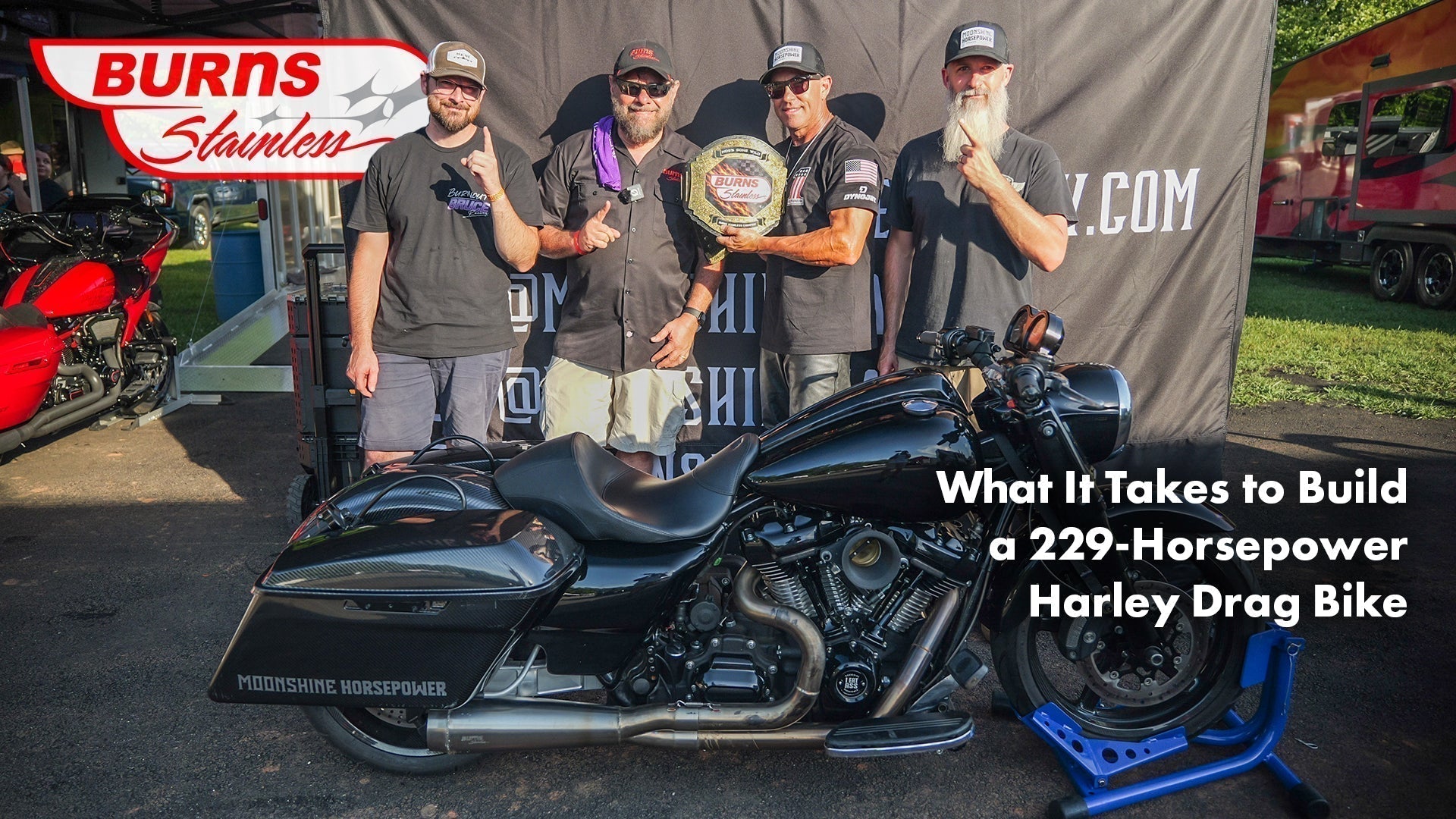
A serious Harley Drag Bike build is not a matter of bolting a big engine into a stock motorcycle and heading for the starting line.
At this level, the entire machine must be developed as one coordinated system. Engine displacement, cylinder-head airflow, fuel delivery, exhaust design, clutch setup, gearing, chassis geometry, suspension and tuning must all support the same objective.
Moonshine Harley-Davidson and Moonshine Horsepower demonstrate that process with Noisy Boy, Build #58—a purpose-built MHP 150 race bike producing 229 horsepower and 191 lb-ft of torque.
Those numbers are impressive, but the real story is what it takes to produce them reliably, control them on the starting line and turn them into a competitive pass.
Start With a Clearly Defined Purpose
Before selecting parts for your Harley Drag Bike build, a builder must decide exactly what the motorcycle is expected to do.
Noisy Boy was not built to idle comfortably through traffic, carry luggage or provide relaxed street manners. It was developed as an all-out race machine designed for the dragstrip and wide-open-throttle operation.
That distinction drives every major decision.
A street-performance motorcycle needs manageable heat, predictable low-speed response, reasonable sound levels and a broad operating range. A dedicated drag bike can sacrifice many of those qualities to gain acceleration, reduce weight and improve high-rpm performance.
Trying to make one motorcycle perform every possible job usually results in compromise. Serious race builders begin with the intended class, rider, track conditions and performance target, then build around those requirements.
The Engine Must Be a Complete Combination
The foundation of a Harley drag bike build like Noisy Boy is its 150-cubic-inch MHP engine combination.
Displacement alone, however, does not create a competitive race engine. The cylinders, pistons, compression ratio, cylinder heads, valves, camshaft, intake system and fuel delivery must work together.
Large-displacement Milwaukee-Eight engines require tremendous airflow. The cylinder heads must be capable of moving enough air to support the engine at high rpm, while the intake and throttle body must supply that airflow without becoming a restriction.
The valvetrain must also remain stable under extreme operating conditions. At race-engine speeds, weak springs, incorrect geometry or excessive component weight can quickly limit performance—or cause engine failure.
The lesson is straightforward: a drag-racing engine is a matched package, not a collection of impressive individual parts.
The Exhaust Is Part of the Engine
Exhaust selection becomes especially important in a Harley drag bike build when an engine reaches the size and airflow demands of Noisy Boy.
A conventional street exhaust may physically attach to the motorcycle, but that does not mean it can properly support a 150-cubic-inch race engine. Poor port alignment, undersized tubing, abrupt transitions or an inefficient collector can restrict flow and disrupt exhaust scavenging.
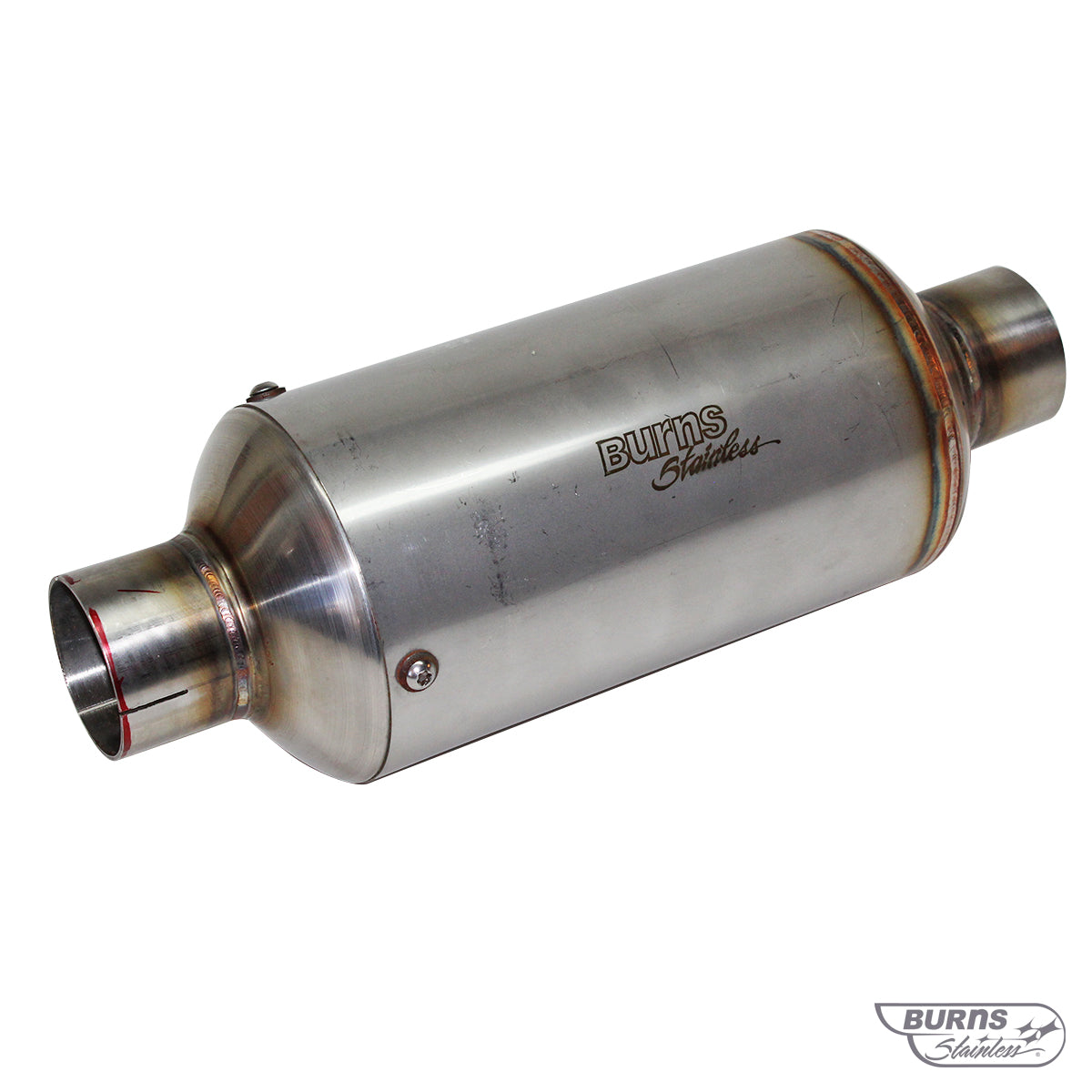
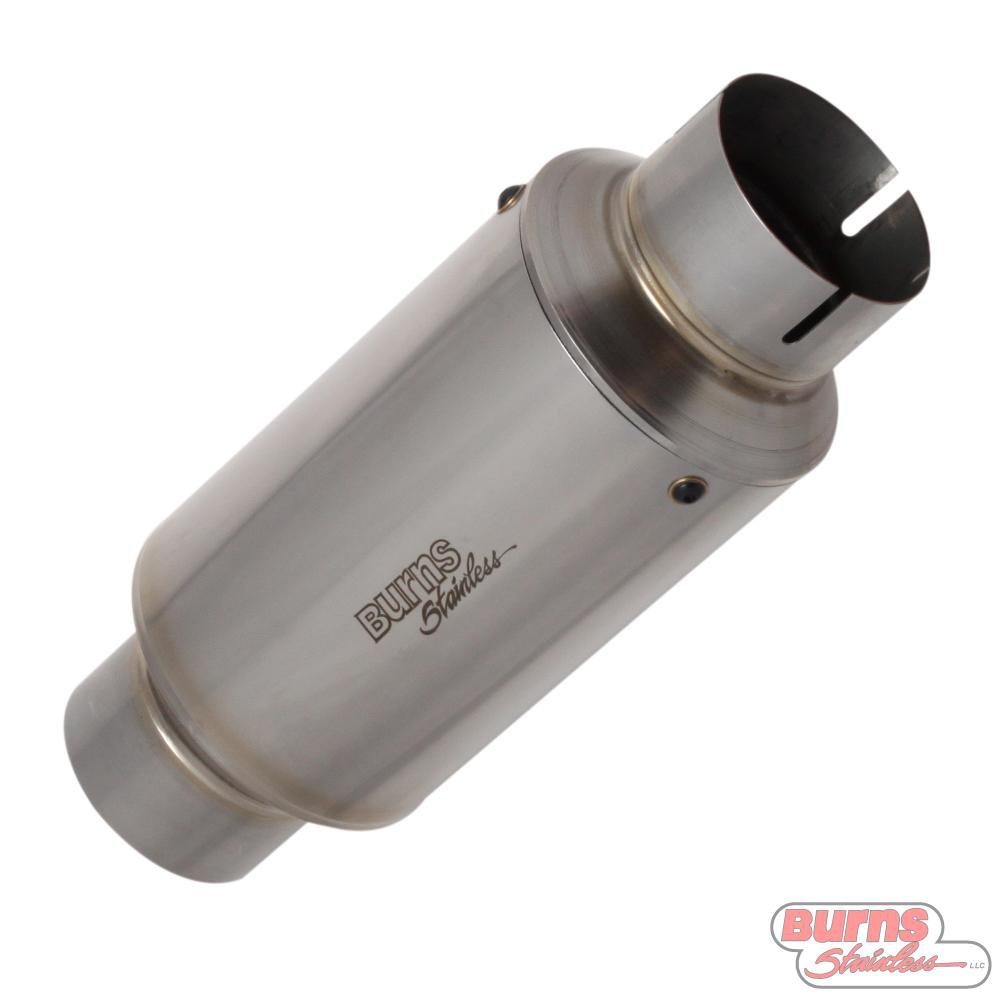
Moonshine Horsepower selected a Burns Stainless WtF—Welded the Flanges—performance exhaust for the Noisy Boy combination.
 The WtF is designed for large Milwaukee-Eight engines using high-flow square-port cylinder heads. Instead of treating the flange as a separate adapter, Burns welds the flanges directly to the primary tubes. This helps create a clean transition from the cylinder-head port into the exhaust system.
That detail matters. Exhaust gas is moving at extremely high velocity as it exits the port. A mismatch, obstruction or abrupt step at that point can create turbulence and leave horsepower on the table.
The WtF uses large stepped primaries that progress from 2 inches to 2⅛ inches and then to 2¼ inches before feeding a 3-inch collector. The stepped design helps maintain exhaust velocity near the cylinder head while providing the additional volume needed as the exhaust travels downstream.
Why the Merge Collector Matters
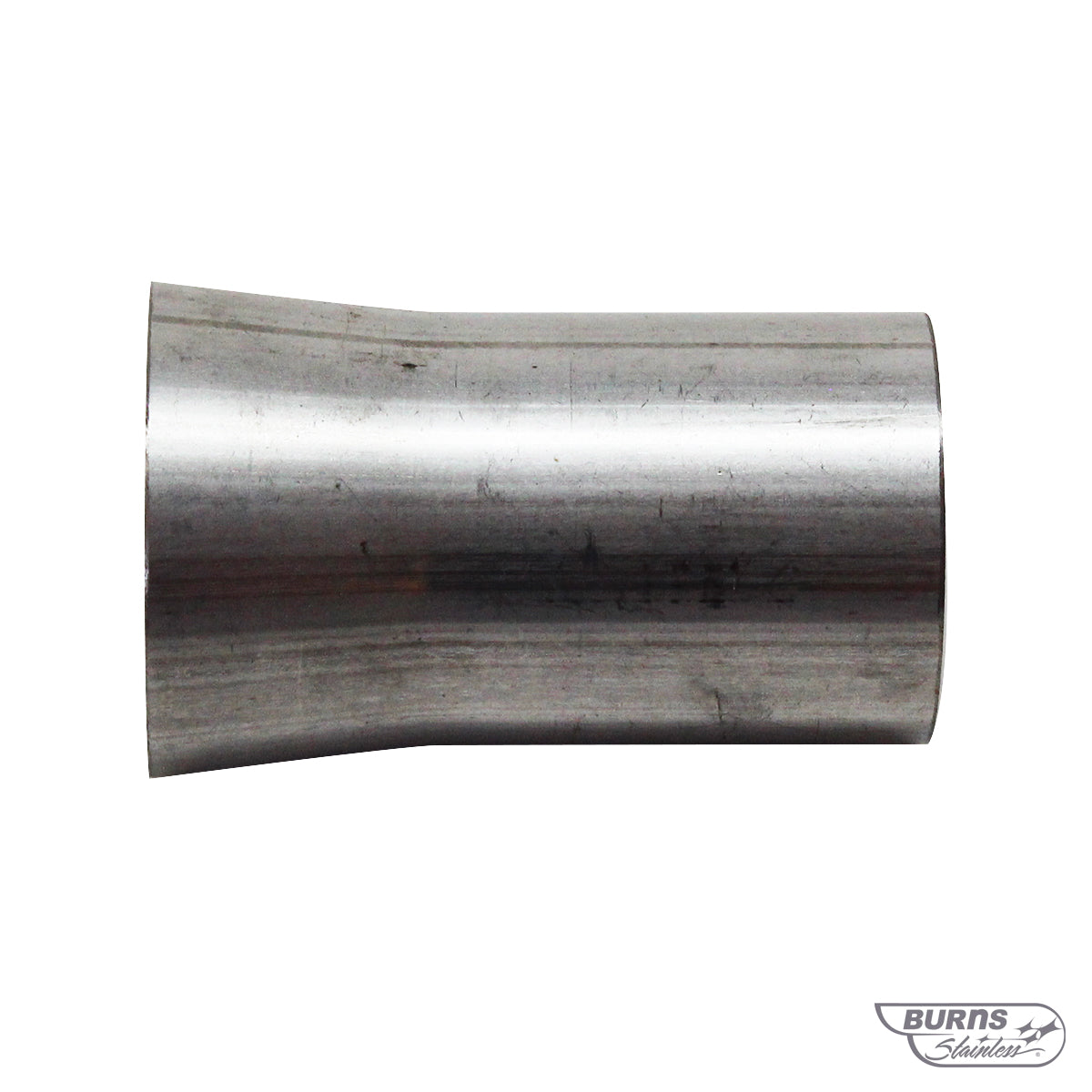
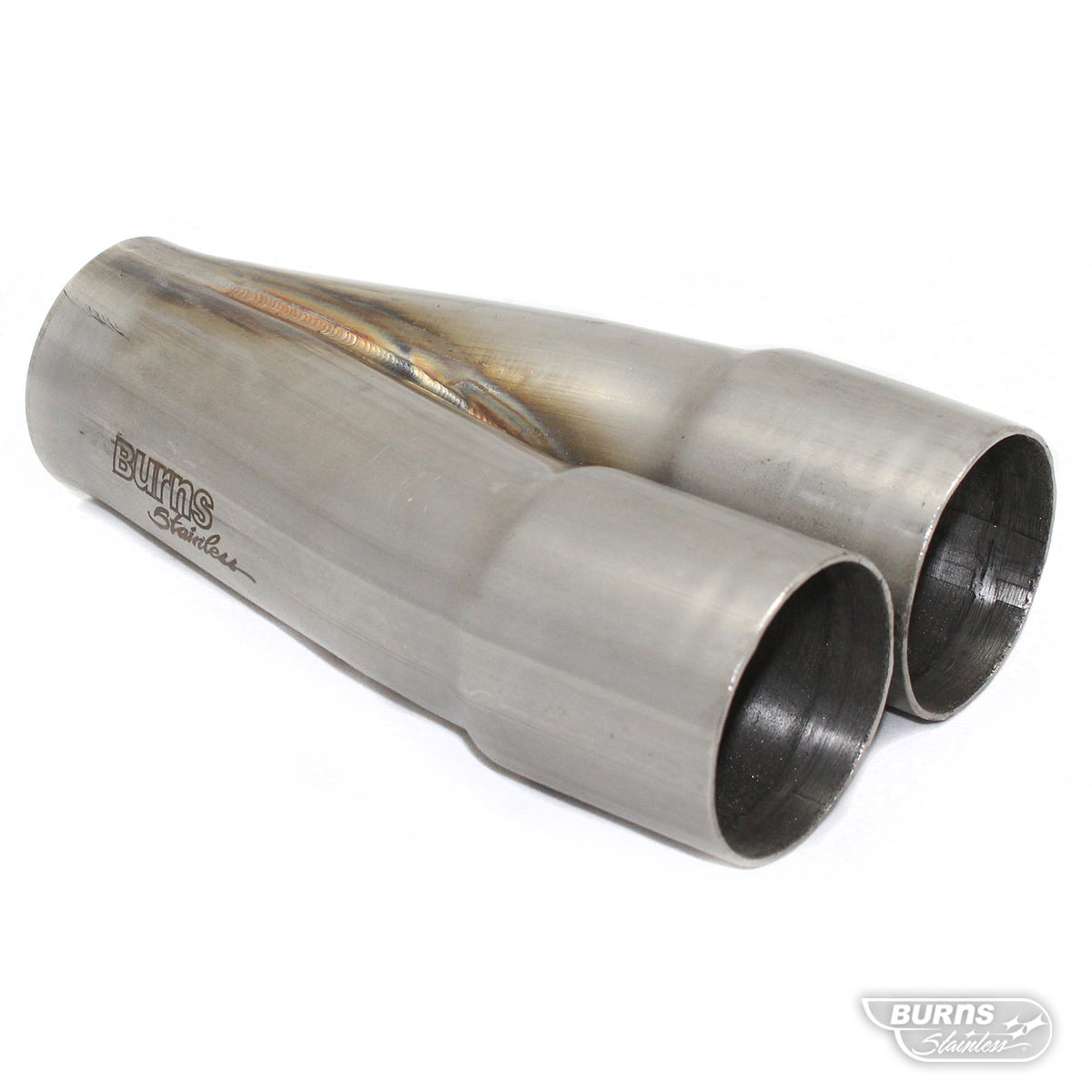
At the center of the WtF system is the Burns Stainless 2-into-1 merge collector.

The collector does more than join two pipes together. Its geometry influences how the pressure waves from each cylinder interact.
A properly designed merge collector can help reduce reversion and create a scavenging effect during the exhaust and valve-overlap periods. Better scavenging helps clear residual exhaust gases from the cylinder, creating more room for the next air-and-fuel charge.
That is particularly important in a Harley-Davidson V-twin, where the engine’s uneven firing sequence creates a complex series of exhaust pulses.
Burns has applied this merge-collector technology in professional motorsports and Harley Pro Stock drag racing. The same fundamental engineering is incorporated into the WtF system used on large-displacement Milwaukee-Eight builds.
For a 229-horsepower race bike, the exhaust cannot simply be loud or visually impressive. It has to manage gas velocity, pressure-wave activity, collector flow and high-rpm volume.
Power Must Reach the Racetrack
Producing 229 horsepower on the dyno is only part of the job.
A competitive Harley Drag Bike build must transfer that power through the primary drive, clutch, transmission, final drive and rear tire without excessive wheelspin or component failure.
The clutch must be capable of holding the engine’s torque while still allowing the rider and tuner to control how aggressively the motorcycle leaves the starting line. Lock it too quickly and the tire may spin or the motorcycle may become difficult to control. Apply it too slowly and valuable elapsed time is lost.
Transmission ratios and final gearing must also match the engine’s usable rpm range. The goal is to keep the engine in the strongest portion of its powerband during every gear change and through the finish line.
This is another reason a broad, usable power curve matters. Peak horsepower may make the headline, but acceleration depends on how much power the engine produces throughout the run.
The Chassis Has to Control the Power
A stock chassis was never designed around the demands of a 229-horsepower drag-racing engine.
Wheelbase, ride height, suspension movement, weight distribution and tire selection all influence whether the motorcycle accelerates cleanly or wastes power.
The front suspension must be controlled without allowing unnecessary weight transfer. The rear suspension must help load the tire while keeping the chassis stable. The rider’s position must provide control without creating excessive aerodynamic drag.
Removing weight can improve acceleration, but every modification must be considered carefully. A lighter motorcycle is not necessarily a faster motorcycle if it becomes unstable, inconsistent or difficult to launch.
The quickest race bikes are not merely powerful. They are repeatable.
Dyno Numbers Are the Beginning
Moonshine Horesepower's Noisy Boy recorded 229 horsepower and 191 lb-ft of torque on the dyno, but a dyno sheet is not the finish line.
Dyno development allows the builder to establish fuel delivery, ignition timing and engine behavior under controlled conditions. It can identify restrictions, unsafe air-fuel ratios and areas where the combination needs improvement.
Track testing then adds the variables the dyno cannot duplicate completely: clutch engagement, traction, launch rpm, shift timing, gearing, rider input and changing track conditions.
A strong Harley drag bike build program moves repeatedly between the shop, the dyno and the racetrack. Each pass supplies information that guides the next adjustment.
Horsepower gets attention. Data creates results.
Why Serious Builders Choose Burns Stainless
A Harley Drag Bike build like that from Moonshine Horsepower understand that the exhaust system must be engineered with the same seriousness as the engine.
Burns Stainless does not approach the WtF as a decorative accessory. The system combines properly aligned welded flanges, stepped primary tubes, an engineered merge collector, adjustable primary length and race-proven construction.
Each system is built from mandrel-bent stainless-steel tubing and assembled using 100-percent argon back-purged TIG welding. Burns’ proprietary X-Design process is used to develop primary dimensions and collector relationships around the engine’s operating requirements.
That engineering is why Burns Stainless exhaust systems appear on motorcycles built to win races, set records and compete in dyno shootouts.
A Drag Bike Is a System
Moonshine Horespower's Noisy Boy Harley drag bike build illustrates the difference between modifying a motorcycle and engineering a race bike.
Its 150-cubic-inch engine, high-flow induction system, race exhaust, drivetrain, chassis and calibration were developed around one goal: accelerating down the dragstrip as quickly and consistently as possible.
The 229-horsepower result did not come from one oversized component or one final dyno adjustment. It came from selecting parts that complement one another and refining the entire combination.
When the engine is expected to operate at this level, the exhaust cannot be an afterthought.
It must be designed as part of the engine.
That is why serious Harley Drag Bike Builds rely on Burns Stainless—and why Noisy Boy runs a WtF performance exhaust.