Walk through any motorcycle event and you'll hear plenty of opinions about exhaust systems.
"This one makes the most horsepower."
"You need the biggest tubing you can fit."
"This is what everyone is running."
 Some of those opinions are based on experience.
Many are based on myths that have been repeated so often they sound like facts.
The truth is that a performance exhaust isn't just another bolt-on accessory. It's an engineered part of the engine. Every decision—from primary tube diameter to collector geometry to outlet size—affects how the engine breathes, where it produces torque, how quickly it responds to the throttle, and how enjoyable it is to ride.
That's why two exhaust systems that look almost identical can perform completely differently.
Before you spend your hard-earned money on your next Harley-Davidson® Milwaukee-Eight® exhaust, here are ten mistakes worth avoiding.
1. Choosing an Exhaust Based on Sound Alone
Let's get this out of the way.
A Harley should sound like a Harley.
 The exhaust note is part of the ownership experience, and there's nothing wrong with wanting a bike that sounds incredible.
The mistake is assuming sound tells you anything about performance.
An exhaust can sound aggressive while making little improvement in usable power. Another may sound more refined while producing a stronger, broader torque curve.
Instead of asking only, "How does it sound?" ask:
- Where is it designed to make power?
- Is it intended for a stock engine or a high-output build?
- Does it prioritize torque, horsepower, or a balanced powerband?
📓 Engineer's Notebook
Exhaust engineers don't begin by asking, "What should it sound like?"
They begin by asking, "What should the engine do?"
The sound is often a byproduct of the engineering—not the other way around.
Quick Take
Choose an exhaust for the performance you want.
Enjoy the sound that comes with it.
2. Assuming Bigger Tubing Always Makes More Power
Few myths have cost riders more money than this one.
Larger tubing does not automatically create more horsepower.
 In fact, tubing that's too large can reduce exhaust gas velocity enough to soften throttle response and low-to-midrange torque—the exact RPM range where most street motorcycles spend their lives.
Proper tube diameter depends on:
- Engine displacement
- Camshaft
- Compression ratio
- Cylinder head flow
- Intended RPM range
- How is the motorcycle actually ridden?
••• MYTH •••
"Bigger pipes always make more horsepower."
Reality
Only if the engine can fill them with velocity.
Oversized tubing on a mild street engine often hurts the power riders feel most.
📓 Engineer's Notebook
Many people think an exhaust's job is simply to move as much air as possible.
It isn't.
Its job is to manage the energy carried by each exhaust pulse. That energy helps evacuate the cylinder and influences where the engine produces torque.
Good exhaust design isn't about maximum flow.
It's about controlled flow.
3. Ignoring How You Actually Ride
Not every Harley lives the same life.
A touring motorcycle carrying luggage across multiple states has very different needs than a motorcycle built for drag racing or road racing.
 Even two motorcycles with identical engines may benefit from completely different exhaust systems because their owners ride them differently.
Ask yourself:
- Is this primarily a touring motorcycle?
- Weekend canyon bike?
- High-performance street build?
- Race bike? Drag racing or road racing? Each requires a different exhaust.
The answer should influence the exhaust you choose.
📓 Engineer's Notebook
One of the first questions we ask isn't "What's your engine?"
It's "How do you ride?"
Because horsepower only matters if it's produced where you use it. Are you using it off-the-starting-line, mid-range out of the turns, or top end to finish first?
Quick Take
Don't buy someone else's powerband. Buy your own.
4. Buying for Today's Engine Instead of Tomorrow's
Many Harley owners build their motorcycles in stages.
Today's motorcycle may receive a cam next year.
Cylinder head work after that.
Eventually, perhaps a larger displacement engine.
Buying an exhaust without considering future plans can mean replacing the same expensive component twice.

📓 Engineer's Notebook
One of the hardest parts of exhaust engineering is balancing today's performance with tomorrow's possibilities.
Sometimes the best long-term decision isn't the exhaust that produces the biggest gain today—it's the one that continues to perform as the engine evolves.
Quick Take
Think two modifications ahead.
5. Chasing Peak Horsepower Instead of the Entire Power Curve
Peak horsepower makes great advertising.
Torque wins stoplight races.
Torque makes highway passing effortless.
Torque is what riders feel every time they twist the throttle.
 A properly engineered exhaust often improves:
- Roll-on acceleration
- Midrange torque
- Throttle response
- Recovery between shifts
- Overall rideability
📓 Engineer's Notebook
When engineers evaluate dyno charts, they rarely look at the biggest number first.
They study the shape of the entire curve.
That's where real-world performance lives.
Quick Take
The motorcycle doesn't know what the brochure says.
It only knows the power it's producing right now.
6. Overlooking the Collector
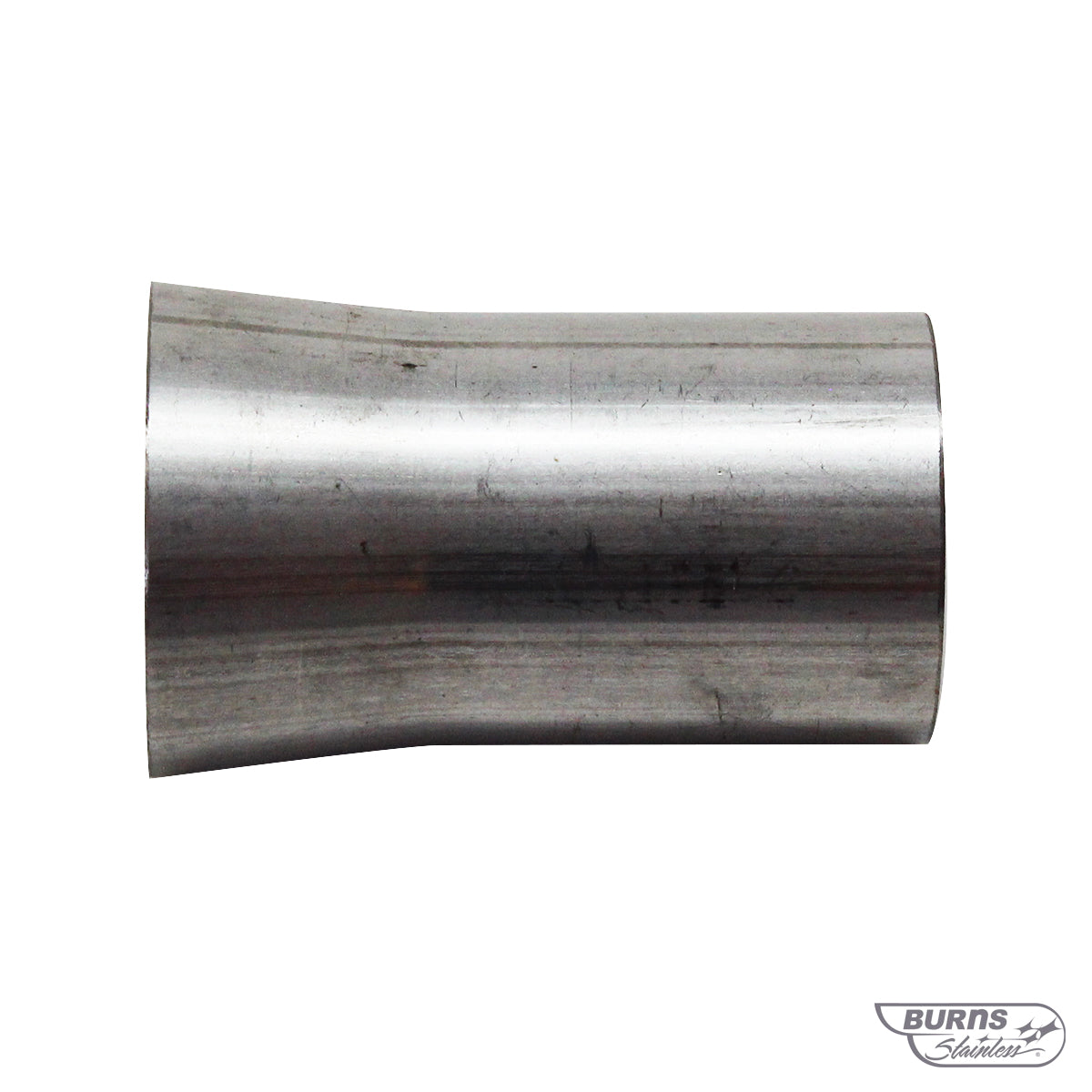
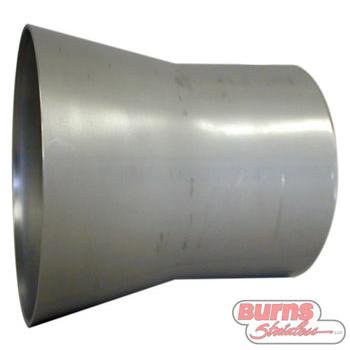
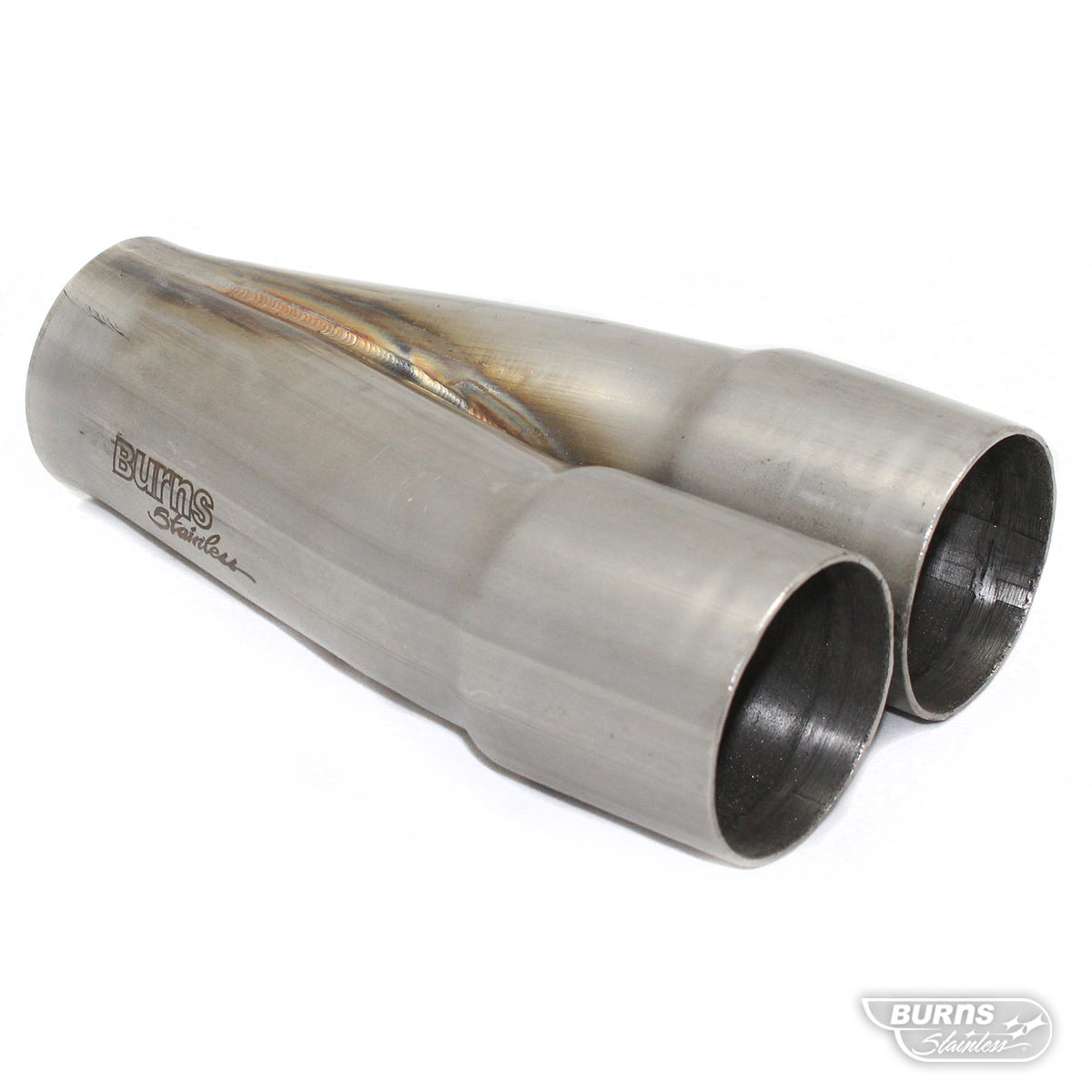
At first glance, the collector looks like little more than the point where two tubes merge into one.
 In reality, it's one of the hardest-working parts of the entire exhaust system.
Merge angle.
Transition shape.
Outlet diameter.
Internal geometry.
Each affects how efficiently exhaust pulses help evacuate the cylinders.
📓 Engineer's Notebook
Collector design has been central to Burns Stainless engineering for decades — in all engine types, because we've repeatedly seen how seemingly small geometric changes dramatically influence real-world performance.
It's one of the places where engineering experience matters most.
Quick Take
Don't judge an exhaust by its head pipes.
The collector often tells the real story.
7. Thinking Every 2-Into-1 Exhaust Performs the Same
They may share the same general layout.
That doesn't make them equal.
Two systems can appear almost identical while producing very different torque curves.
Why?
 Because performance comes from details that are often hidden:
- Primary length
- Tube diameter
- Collector geometry
- Outlet sizing
- Internal transitions
- Overall tuning
📓 Engineer's Notebook
Some of the biggest performance differences aren't visible from the outside.
Good engineering often hides in places most riders never notice.
Quick Take
Configuration is only the beginning.
Engineering determines the outcome.
8. Ignoring Heat and Rider Comfort
Performance isn't measured only on a dyno.
It's measured three hours into a ride.
Heat management.
Leg clearance.
Ground clearance.
Saddlebag fitment.
Passenger comfort.
These matter just as much as horsepower for many riders.

📓 Engineer's Notebook
Performance engineering isn't simply about making more power.
It's about improving the entire riding experience.
Sometimes moving a tube half an inch changes that experience dramatically.
Quick Take
The best exhaust is one you'll still love after a full day's ride. A comfortable rider makes a more confident experience.
9. Believing Every Dyno Chart
Dyno testing is an outstanding engineering tool.
Marketing isn't always engineering.
Different dynos.
Different correction factors.
Different tuning.
Different weather.
Different motorcycles.
Every one of these variables changes the result.
••• MYTH •••
"This exhaust made 10 more horsepower."
Reality
Compared to what?
Under what conditions?
On which engine?
📓 Engineer's Notebook
At Burns Stainless, we view dyno testing to validate engineering decisions—not as a contest to produce the biggest headline number.
Context matters.
Quick Take
Trust repeatable engineering more than impressive marketing.
10. Buying Without Understanding the Engineering
Today's online shopping makes it easy to compare finishes, prices, and shipping times.
Those aren't what determine performance.
The best exhaust isn't necessarily the most expensive.
Or the loudest.
Or the one everyone else owns.
It's the one engineered for your engine combination and your performance goals.

📓 Engineer's Notebook
Every exhaust design is a series of engineering tradeoffs.
Increase performance in one RPM range and you may sacrifice another.
Good engineering isn't about maximizing one characteristic.
It's about optimizing the complete system.
Quick Take
The best exhaust isn't built for everyone.
It's built for a purpose.
Why Burns Stainless Engineers Exhausts Differently
Many manufacturers start with tubing.
We start with the engine.
Every Burns Stainless Harley M8 production exhaust begins with a clear engineering objective.
Where should the engine make torque?
What RPM range should it emphasize?
What type of rider is this system intended to serve?
From there, primary tube diameter, tube length, collector geometry, outlet sizing, and overall tuning are developed as one integrated system.
The result isn't one exhaust attempting to satisfy everyone.
It's a family of engineered production systems; each developed around a distinct performance goal.
That's why selecting the right Burns system is more important than simply selecting the most expensive one.
Choose the Exhaust That Matches Your Motorcycle
The best Harley M8 exhaust isn't necessarily the loudest.
Or the biggest.
Or the most expensive.
It's the one that complements your engine, your riding style, and your long-term goals.
When those pieces come together, the motorcycle feels like a completely different machine—not because it makes one impressive dyno number, but because every ride becomes more responsive, more predictable, and more enjoyable.
Ready to Choose the Right Harley M8 Exhaust?
Burns Stainless has engineered production Harley M8 exhaust systems for distinct performance goals—from responsive street performance to high-output race applications.
Explore our Harley M8 exhaust lineup, compare which system was engineered for your engine combination, or use our Exhaust Selector to identify the best match for your motorcycle.
If you still have questions, our team is happy to help you choose the Burns Stainless production system that best fits your build and the way you ride.