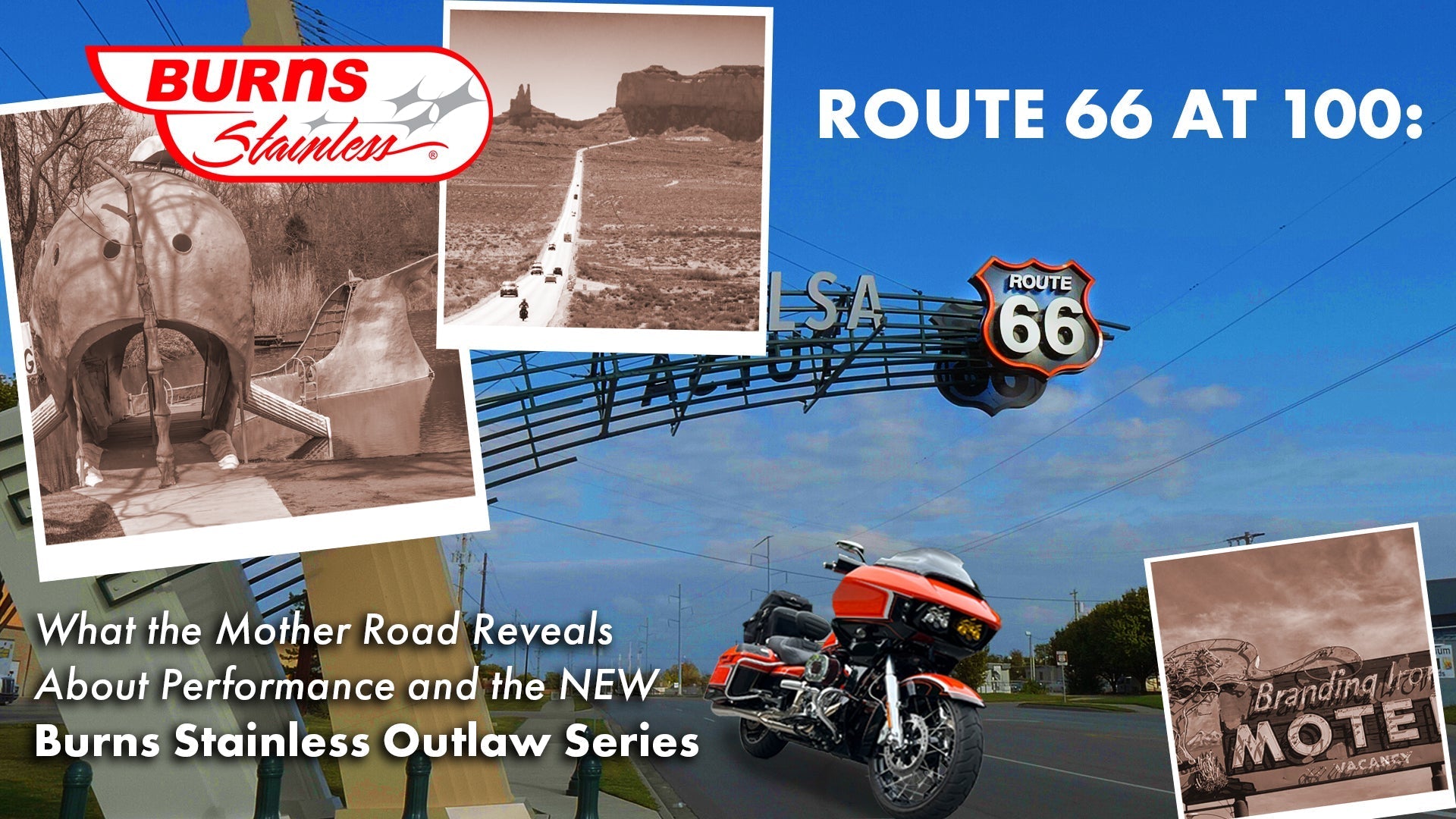
Route 66 turns 100 in 2026. Most people will package that anniversary as a nostalgia story: old signs, diner stops, and an easy ride across America.
That misses what the road actually does.
For Harley riders who care about performance, Route 66 is more than a historic highway. It is a test. Long miles under load. Heat. Elevation change. Wind. Inconsistent fuel. Extended stretches where the bike gets no break. The Mother Road earned its place in American culture by connecting Chicago to Santa Monica through eight states and linking towns, businesses, workers, migrants, and travelers across the country. From the saddle of a Harley, it also exposes something honest: whether your performance upgrades truly work, or whether it only sounds good leaving the parking lot.
That is why Route 66 deserves more than postcard treatment. It reveals the difference between appearance and function.
The Mother Road and Harley Culture
Route 66 became America’s Mother Road because it carried more than traffic. It carried ambition, migration, commerce, and roadside independence. Gas stations with seasoned mechanics, diners, motor courts, parts shops, and small-town main streets grew up around it. Long before travel was flattened into identical exits and chain stores, Route 66 gave riders a road with character.
That cultural weight lines up naturally with Harley culture. A Harley does not isolate the rider from the road. You hear the engine. You feel the weather. You know when the machine is happy, and you know when it is not. Your bike reflects your character. On Route 66, that relationship gets sharper. The road asks more from the machine and from the rider. That is part of its draw.
Route 66 Requires Performance
A lot of Harley builds are optimized for impression. They hit hard for a moment.

They make the right noise. They create the right first reaction.
Then the miles begin to stack up.
Put that same bike into sustained load and weaknesses show themselves. Power tapers off. Throttle response softens. The engine feels like it is working harder than it should. What felt crisp in a short pull starts to fade across distance.
That is not the road’s fault. That is the system.
Route 66 and other long stretches of road exposes whether the engine is moving air efficiently or just pushing volume without control. And that comes down to how well the exhaust is doing its job.
The Stops That Count Are Not Always in the Travel Guides
Most Route 66 guides will tell you where to eat. Fair enough. Riders focused on performance should pay attention to another kind of stop.
Places like Joliet, Tulsa, Amarillo, and Albuquerque do more than mark points on the map. They connect the Mother Road to dragstrip culture, where the difference between a strong-running bike and a weak one becomes obvious in a hurry. Drag racing strips away excuses. You are not cruising. You are not coasting. You are asking the engine to accelerate under full load, and whatever is wrong shows up fast.
That connects directly to what Route 66 reveals over distance. One bike pulls clean, carries power, and keeps accelerating. Another hits, then flattens. It sounds aggressive, but it does not continue to pull. That gap is rarely just tuning. More often, it comes down to how the system handles velocity and pulse structure under load.
Dragstrips simply make the truth visible sooner.
Why So Many Harley Exhaust Systems Fall Off
Most off-the-shelf Harley exhaust systems are built around what is easiest to market:
Peak numbers.
Sound.
Immediate response.
Those are short-duration metrics. They do not tell you how the system behaves when the ride turns into hours instead of minutes. They do not tell you how it handles heat, sustained throttle, changing conditions, and real distance.
That is where oversized systems begin to lose the plot.
It is easy to sell the idea of more flow. But once pipe size exceeds what the engine can actually support, velocity drops. When velocity drops, pulses lose definition. And when that happens, the system stops working as a coordinated series of events and starts acting like open volume.
That is why the bike that felt strong at low load does not carry on the top end or over distance.
A properly designed system does not just flow more. It maintains energy in the pulse. It keeps the signal intact. It allows the engine to keep working efficiently as load increases. That is the difference between a bike that merely survives Route 66 and one that runs hard across it.
What Sustained Miles Really Demand
Short pulls hide problems. Distance exposes them.
That is one of the clearest lessons the Mother Road teaches. When you are riding mile after mile, the system does not get to reset. Heat builds. Conditions change. Load stays consistent. Marginal setups begin to separate from strong ones.
You feel it before you can explain it. The bike that felt sharp starts to dull. Throttle response loses its edge. The engine feels like it is pushing instead of working cleanly. That is not tuning drifting off by accident. That is the system losing efficiency because it was built for the wrong job.
For riders serious about performance, that is the line that counts. Not whether a system makes a quick impression. Whether it keeps the bike responsive, efficient, and strong when the road keeps asking for more.
Introducing the Burns Stainless Outlaw Series
That is the problem Burns Stainless set out to solve.
The new Outlaw Series is not a louder version of what already exists. It is not a cosmetic rework. It is a system built for long miles, sustained load, and real-world conditions. Built to carry power, not just hit once and fade.
That distinction exists because most systems are designed to make an impression. Very few are designed to hold performance together when the ride turns into hours instead of minutes. The Outlaw Series is aimed directly at that gap.
This is not about chasing a sound clip or a peak number and calling it done. It is about building a system that can be judged the right way: under load, over time, and in real riding conditions. The kind of miles Route 66 represents. The kind of full-load moments you find near the dragstrips along the way. Different environments. Same question.
Does it carry, or does it fall off?
That is the standard.
The Outlaw Series was built to answer it.
Engineered to Go Fast. Built to Go Far.
That is where the centennial of Route 66 connects to the future of Harley performance.
The Mother Road has lasted a hundred years because it reveals something real. It does not reward shortcuts. It does not mask weaknesses. It reflects back exactly what you brought with you. For riders who care about performance, that is not a drawback. That is the appeal.
A strong-running Harley is not one that just makes a number. It is one that stays responsive, carries power, and keeps working when the miles stack up. That is the standard Route 66 demands. And that is the standard Burns Stainless is building for with the Outlaw Series.
Because if a system is built right, it should not just survive the road. It should show up at the track and carry there too.
Burns Stainless Outlaw Series
Engineered to go fast. Built to go far.