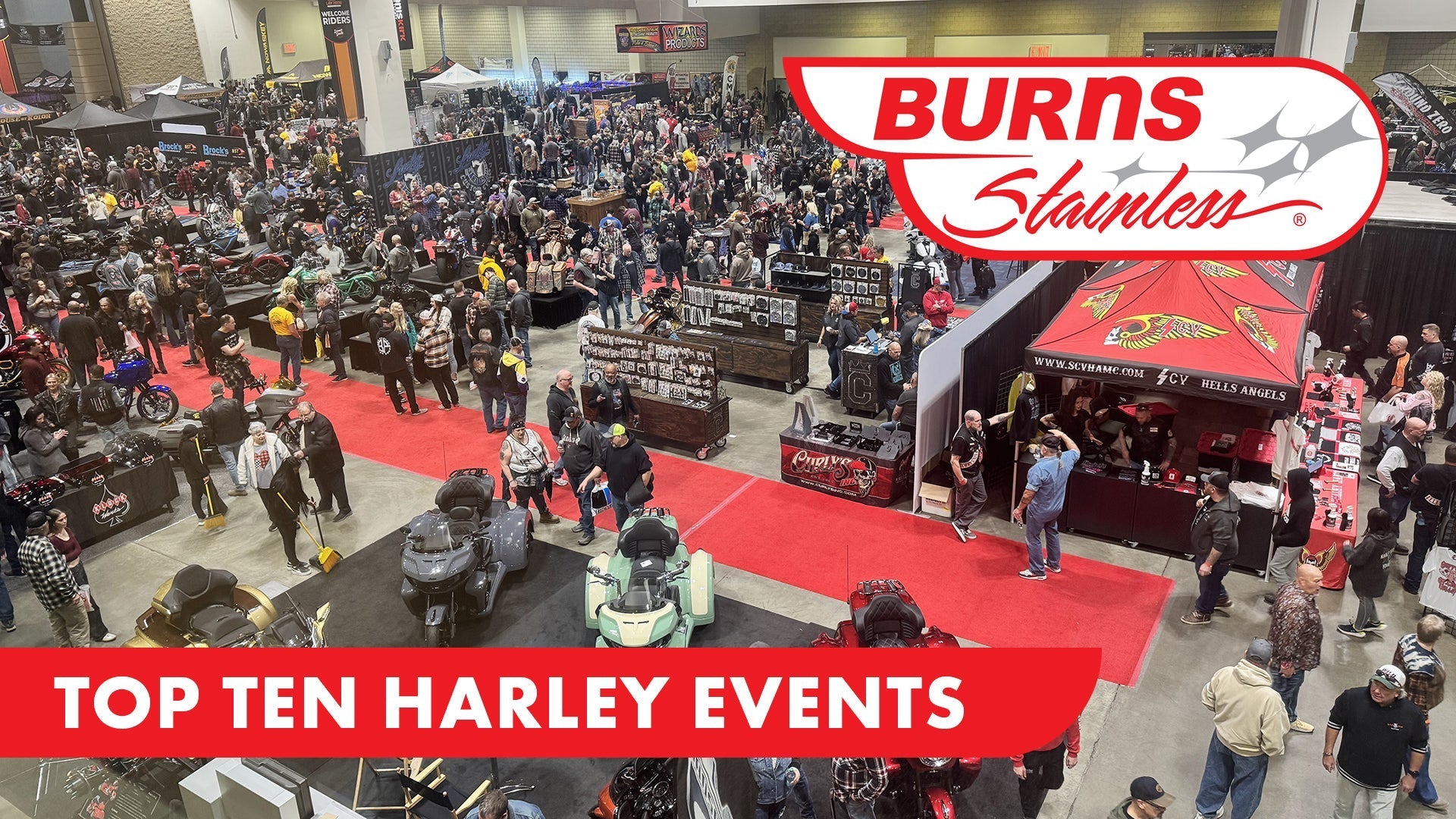
Most lists like this turn into travel guides—where to go, what to see, where to grab a beer.
That’s not what this is.
This is about where different parts of the Harley world show up—and what you learn when you’re there. Because not every event serves the same purpose. Some shape direction. Some connect people. Some expose what works. And these few sit at the very top of our list.
If you’re serious about performance, you don’t just attend events. You pay attention to what each one reveals.
1. Daytona Bike Week + King of the Baggers
Daytona is where the season starts—and where everyone goes to see what changed.
You’ve got the full Harley world in one place. Street bikes, show builds, race teams, vendors, and builders all walking the same ground. We go there not just to rid, we are watching. Watching what parts are showing up. Watching which combinations are getting attention. Watching what might actually work.
Because this is early in the season, it matters more than most events. Builders and racers use Daytona as a checkpoint, then head back to their shops to finish bikes before the season really gets going. When King of the Baggers hits the track, the tone shifts—and you start to see what carries over.

2. Laconia Bike Week
Laconia doesn’t try to be everything—and that’s exactly why it has endured.
It’s one of the oldest rallies in the country, but it feels different from the bigger events. The crowd is tighter, more local, and more focused on riding than showing up. You’re not just seeing bikes parked—you’re seeing them come in hot, get ridden hard, and go back out again.
That carries over into the events around it. You’ve got racing at New Hampshire Motor Speedway, including baggers and vintage V-twins, the Tower Hillclimb, and opportunities for riders to get laps on track. Builders like Jason Souza and others show up as well, keeping the connection between riders and the people building the bikes grounded and real.

3. Harley-Davidson Homecoming Festival
The Harley-Davidson Homecoming Festival is about one thing: the brand and the culture behind it.
This is where we see the full scale of Harley-Davidson—longtime riders, new owners, factory presence, and everything in between. It’s not about performance, competition, or proving anything. It’s about being part of something that’s bigger than any one build or trend.
Between concerts, demo rides, museum access, and factory tours, the experience goes beyond the bike itself. This is where you understand what Harley-Davidson actually is—not online, not in a showroom, but in person.

4. Donnie Smith Bike Show
The Donnie Smith Show is about more than bikes; it’s about the new trends and parts.
We see high-level builds, but what makes this event matter is the concentration of people who shape the custom Harley world. Builders and industry names like Rick Ward, Brian Klock, Brock Davidson, and Dave Perewitz aren’t there for appearances—they’re there because this is where the conversation happens.
We don’t just see finished bikes here. We see ideas moving between builders, companies, and shops. We get to see where things are going before they show up anywhere else.

5. Born-Free Show (CA & TX)
Born-Free is where builders bring ideas to a young crowd versed in nostalgia.
What started as a chopper show has grown into something broader—a place where style, fabrication, and performance thinking show up early, before they’ve been filtered or standardized. The bikes here aren’t trying to appeal to everyone. They’re intentional.
Builders like Aaron and Sean Guardado and Brandon Holstein show up with bikes that aren’t following a template—they’re setting one. With both California and Texas events—and racing tied into the Texas version—some of those ideas even get pushed further.
Being local to us, this is also where we show up in person—our booth gives riders and builders a chance to see Burns Stainless systems up close and talk through what they’re trying to build.

6. Hogs Gone Wild
Hogs Gone Wild is where the talking stops.
You line up, make a pass, and then you do it again. And that’s where the differences start to show. Some bikes feel strong once. Then they fall off. Heat builds, response softens, and the next pass isn’t the same as the first.
The bikes that are well-designed and well-built don’t do that. They repeat. Same feel. Same pull. Same result.
Riders come in from across the country, and the field tells the story. A large portion of the field is already running Burns Stainless systems. We are sponsoring the Gangster Street class where you can win THE BELT and a $3,000 purse! This is racing culture. Not in theory. Not on a dyno. On the track.

7. Sturgis Motorcycle Rally
Sturgis is overwhelming on purpose. It is a bucket-list.
Hundreds of thousands of riders, endless bikes, concerts, vendors, and miles of riding through the Black Hills—it’s the center of motorcycle culture for a week. We have spent days there and never saw the same thing twice.
But inside all that noise, there’s another layer. At the drag strip and race events—places like the Buffalo Chip and Sturgis Dragway—everything gets stripped down. No distractions. Just bikes lining up and running.
That’s where the contrast shows up. Some bikes hook and go. Some don’t. And the gap between appearance and actual performance becomes obvious fast.

8. AHDRA / XDA Drag Racing Series
The American Harley Drag Racing Association and Xtreme Dragbike Association aren’t single events—they’re a circuit.
Running across multiple tracks and conditions, these series demand consistency. You don’t get to rely on one good pass. You have to show up, you have to perform, and you have to repeat it over and over again.
Events like Baggers on the Beach highlight just how competitive that middle ground has become between serious street bikes and purpose-built race machines.

9. AMRA Finals – Rockingham
The AMRA Jim McClure All-Harley World Finals is one of the most focused drag racing environments in the Harley world.
Held at Rockingham Dragway, it brings together top teams, serious builds, and riders who know exactly what they’re looking at. This isn’t a casual crowd, and it’s not a casual event.
Racers like Wolfgang Grasser and Jason Crisp—both Burns Stainless customers—compete at this level, where performance is measured, repeatable, and impossible to fake.
10. King of the Baggers – Laguna Seca
Laguna Seca is where everything gets pushed to the limit.
This isn’t a rally or a one-pass event. It’s sustained load, braking, cornering, heat, and repetition on one of the most demanding tracks in the country. The bikes in King of the Baggers are built to handle all of it—lap after lap.
They still look like baggers, but what they do on track is something else entirely. Lean angles, speed, and overall performance push well past what most riders expect from a touring platform.
This is what the top of the pyramid looks like.
Where Burns Stainless Fits
We’re not trying to be everywhere.
We show up where it matters—and where riders are actually paying attention.
You’ll see us at events like Born-Free, where builders are working through ideas in real time and want to get their hands on the details. You’ll see us at Hogs Gone Wild, where performance isn’t a conversation - it’s something that has to repeat. We are visiting the greats at the Donnie Smith show and enjoying the cool nights at Sturgis.
Across the season, our systems show up on bikes that are being ridden, tested, and pushed—not just parked.
That’s intentional.
Because we’re not building for the parking lot. We’re building for riders who want something that holds up—over miles, over heat, and over repeated use.
If you’re walking through these events and paying attention, you’ll start to see the difference.
Not in a spec sheet, but in how the bike behaves.

Final Thought
Most riders will hit one or two of these and call it a season.
Performance riders move through them differently.
They start by seeing what’s out there. Then they start paying attention to who’s building it. Then they start testing their own bikes. And eventually, they start chasing something that holds up under real conditions.
Because at some point, the question changes. Not: Does this look right? But: Does this actually work when it matters? And that answer doesn’t come from one place.
It comes from seeing the whole picture.