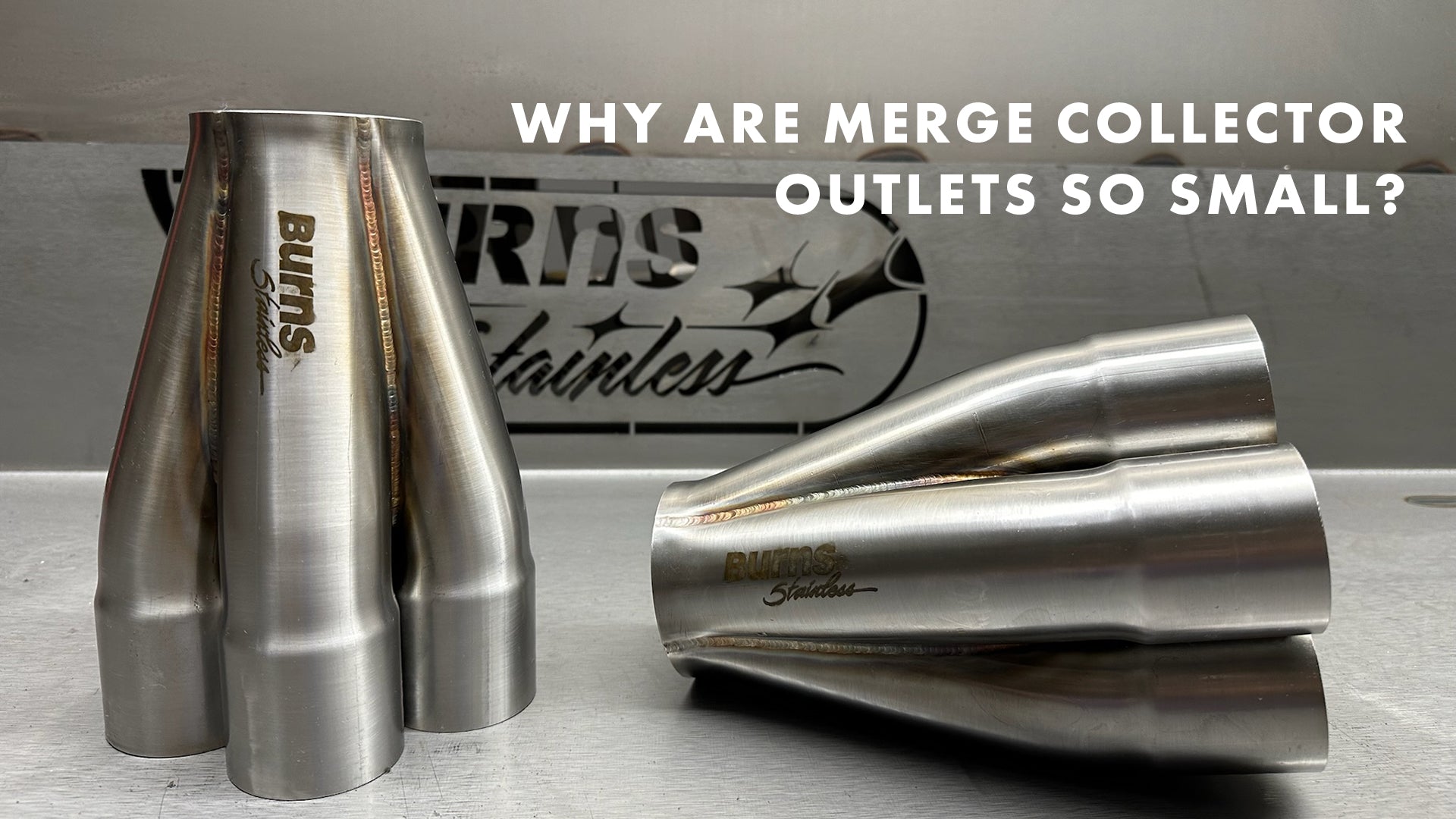
Why Is a Merge Collector Outlet Smaller Than the Primary Tubes?
A merge collector outlet is often smaller than builders expect because an exhaust system does not flow like a simple plumbing system. Exhaust gas moves through the header in a series of timed pulses, and the collector outlet is sized to manage those pulses, maintain velocity, and support the engine’s intended RPM range.
A properly sized collector outlet—often called the collector Venturi—can improve exhaust velocity and pressure-wave behavior. Making the outlet larger does not automatically increase power. In fact, an oversized collector outlet can hurt performance in parts of the RPM range.
Why Does a Merge Collector Outlet Look Too Small?
 One of the most common questions we hear at Burns Stainless is:
How can that small collector outlet possibly support the engine’s horsepower?
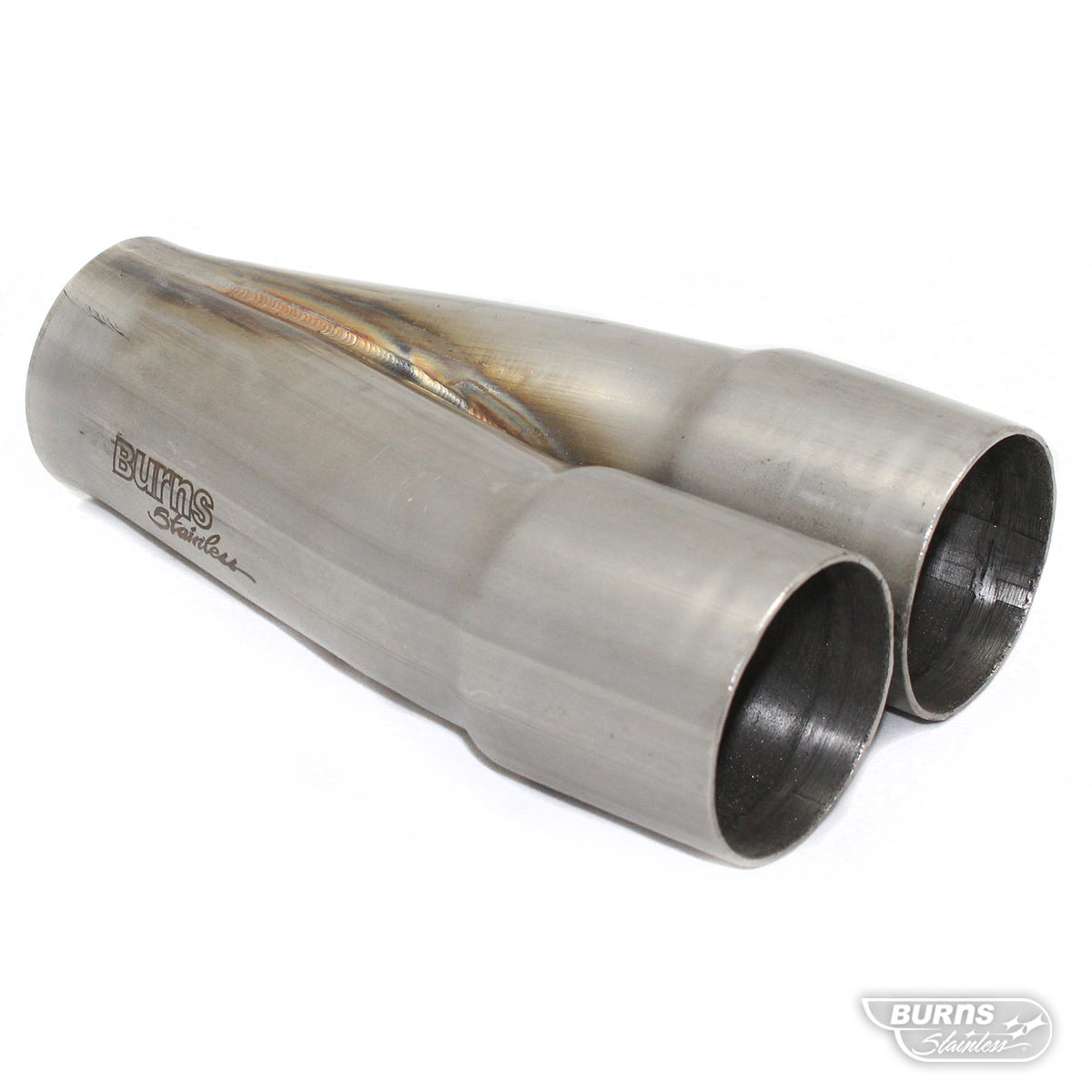
The concern makes sense. Several large primary tubes merge into a collector, yet the outlet may appear much smaller than the combined area of those tubes.
The mistake is assuming that all of the primary tubes are flowing their maximum exhaust volume through the collector at the same time.
They are not.
Each cylinder produces an exhaust event at a specific point in the engine cycle. Those exhaust pulses travel through the primary tubes and arrive at the collector according to the engine’s firing order, RPM, and exhaust system geometry.
At some engine speeds, exhaust events may overlap. But the collector still does not behave like a simple pipe carrying the combined steady-state flow of every primary tube.
That is why adding up the cross-sectional area of the primary tubes is not a reliable way to size a merge collector outlet.
What Does the Collector Venturi Do?
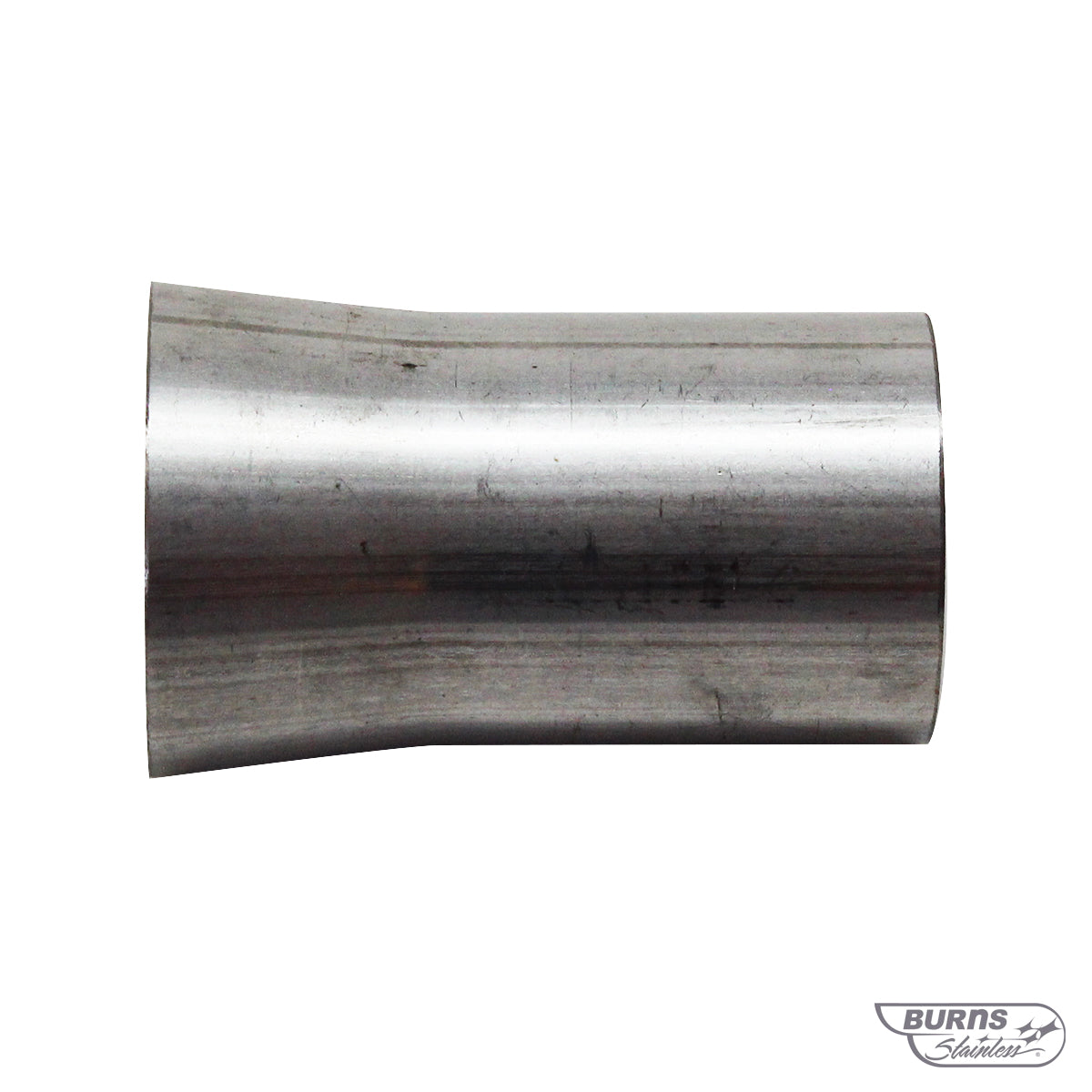
The collector Venturi is the smallest section near the outlet of a merge collector. Its job is not simply to pass exhaust gas.
A properly sized Venturi helps:
-
Maintain exhaust gas velocity
-
Influence pressure-wave behavior
-
Support cylinder scavenging
-
Shape the engine’s torque and horsepower characteristics
-
Match the exhaust system to the intended RPM range
The Venturi is one part of a complete tuned exhaust system.
If it is too small, it can restrict the engine at higher flow rates and RPM.
If it is too large, the system may lose velocity and weaken the pressure-wave behavior that helps the exhaust system perform.
The goal is not the largest possible outlet.
The goal is the correct outlet for the engine and how it is used.
Does a Bigger Collector Outlet Make More Horsepower?
 Not necessarily.
A larger collector outlet may help an engine that operates at very high RPM or produces enough exhaust flow to require additional area. But increasing the outlet size can also change where the engine makes torque and horsepower.
A collector outlet that is too large may reduce performance in the lower or middle portions of the RPM range.
This is why collector outlet diameter should not be selected based on horsepower alone.
Two engines making similar peak horsepower may require different collector outlets if they have different:
-
Displacements
-
RPM ranges
-
Cylinder counts
-
Firing orders
-
Camshafts
-
Primary tube sizes
-
Intended uses
A high-RPM race engine and a lower-RPM engine can make similar horsepower while requiring very different exhaust systems.
How Does RPM Affect Collector Outlet Size?
As engine RPM increases, the time between exhaust events becomes shorter.
At lower engine speeds, individual exhaust pulses are more separated. As RPM increases, the pulses arrive at the collector more frequently and exhaust flow begins to behave more like a continuous stream.
For that reason, engines operating at very high RPM will often require a larger collector outlet than lower-RPM engines making similar horsepower.
This is an important point:
The correct collector outlet size depends on where the engine makes power—not just how much peak horsepower it makes.
How Do You Calculate the Correct Merge Collector Outlet Size?
There is no single collector outlet size formula that works for every engine.
The correct size depends on the complete engine and exhaust system combination, including:
-
Engine displacement
-
Number of cylinders
-
RPM range
-
Peak torque RPM
-
Peak horsepower RPM
-
Camshaft specifications
-
Exhaust valve size
-
Primary tube diameter
-
Primary tube length
-
Collector configuration
-
Intended use
There are three practical ways to determine the correct collector outlet size: dyno testing, exhaust system analysis, and testing with a tunable collector.
Method 1: Dyno Test Different Collector Outlet Sizes
 The most direct method is to test multiple collector configurations on an engine dyno or chassis dyno.
By changing the collector outlet diameter and comparing the results, an engine builder can determine how each configuration affects:
-
Peak horsepower
-
Peak torque
-
Average power
-
RPM range
-
Shape of the power curve
The advantage of dyno testing is that the engine tells you what it wants.
The disadvantage is cost and time.
Building multiple collectors for a single test program can become expensive, especially when collector outlet size is only one of many variables.
A complete exhaust development program may also test primary diameter, primary length, collector length, megaphone geometry, reverse cones, tailpipe length, and mufflers.
The number of possible combinations grows quickly.
Method 2: Use Burns Stainless X-Design
For builders who want an engineered starting point without fabricating and testing numerous exhaust systems, Burns Stainless developed X-Design.
Using detailed engine specifications, X-Design calculates a complete exhaust system recommendation.
Depending on the application, the analysis can include:
-
Primary tube diameter
-
Primary tube length
-
Collector configuration
-
Collector outlet diameter
-
Tailpipe diameter
-
Tailpipe length
The key difference is that X-Design does not treat collector outlet size as an isolated number.
The outlet is calculated as part of the complete exhaust system and matched to the engine’s specifications and operating range.
For most builders, X-Design is the most practical way to get close to the combination the engine wants before fabrication begins.

Method 3: Test with a B-TEC Tunable Exhaust Collector
For engine builders and racers who want to test collector outlet sizes without building a new collector for every test, Burns Stainless developed the B-TEC—Burns Tunable Exhaust Collector—also known as Dyno-Sys.
The B-TEC system uses interchangeable Venturi sections.
Instead of replacing the complete collector, the engine builder can:
-
Install a Venturi.
-
Make a dyno pull or track test.
-
Change the Venturi size.
-
Test again.
-
Compare the results.
 This makes it possible to determine what the engine actually wants while reducing the time and expense of fabricating multiple complete collectors.
Can Collector Outlet Size Be Changed for Weather or Altitude?
Yes. A tunable collector can allow racers to adjust the exhaust system for changing operating conditions.
An engine running in cool, dense air may produce more power and require a larger Venturi. The same engine operating in hot, thin air or at higher altitude may respond differently.
With a tunable collector, racers can test different outlet sizes without replacing the entire exhaust system.
This can be especially useful in racing applications where atmospheric conditions and engine output change from one event to another.
What Can You Test with a Tunable Collector?
Burns Stainless has built tunable collector systems in many configurations, including:
-
2-into-1 collectors
-
4-into-1 collectors
-
5-into-1 collectors
-
Megaphone systems
-
Reverse-cone megaphones
-
Straight tailpipes
-
Muffled systems
Depending on the configuration, a tunable exhaust system can be used to test:
-
Collector outlet diameter
-
Venturi diameter
-
Megaphone length
-
Reverse-cone geometry
-
Tailpipe length
-
Muffler combinations
This allows serious engine builders to evaluate the complete exhaust system rather than focusing on one dimension.
How Small Is Too Small for a Merge Collector Outlet?
A collector outlet is too small when it creates excessive restriction for the engine’s airflow and operating RPM.
Possible signs of an undersized collector outlet may include:
-
Power falling off earlier than expected at high RPM
-
Reduced peak horsepower
-
Increasing sensitivity to exhaust backpressure
-
Improvement when a larger outlet is tested
But appearance alone cannot tell you whether a collector outlet is too small.
A Venturi that looks restrictive may be exactly right for the engine.
The only reliable way to determine whether the outlet is too small, too large, or correctly sized is to evaluate it as part of the complete exhaust system through engineering analysis, dyno testing, or controlled testing with interchangeable components.
What Is the Best Collector Outlet Size for My Engine?
The best collector outlet size is the one that matches the engine’s displacement, RPM range, cylinder configuration, camshaft, primary tubes, and intended use.
There is no universal rule that says a certain horsepower level requires a specific collector outlet diameter.
That is why Burns Stainless approaches collector outlet sizing as part of complete exhaust system design.
For most builders, there are three paths:
Use XDesign when you want an engineered exhaust system recommendation before fabrication.
Use a B-TEC tunable collector when you want to test multiple collector outlet sizes on the dyno or at the track.
Use a custom dyno development program when the application justifies building and testing multiple complete exhaust configurations.
The Bottom Line
A merge collector outlet should not be sized by adding up the area of the primary tubes or by assuming that bigger always flows better.
A tuned exhaust system is driven by exhaust pulses, pressure waves, engine speed, and time.
The correct collector outlet size is the one that works with the complete exhaust system to support the engine in the RPM range where it actually operates.
That is why the right collector outlet may look smaller than expected.
And it is why, when it comes to merge collectors, bigger is not always better—correct is better.