How Engineering, Risk, and Performance Created Two-Wheeled Freedom
The motorcycle was not invented to be safe, comfortable, or practical.
And yet, builders kept coming back to two wheels.
Because when weight drops and power rises, performance follows. That truth hasn’t changed in over 150 years.

The First Motorcycles Were Dangerous by Design
The earliest motorcycles appeared in the 1860s, and they weren’t powered by gasoline at all. Steam-driven machines like the Michaux-Perreaux velocipede in France and Sylvester Roper’s steam motorcycle in the United States were among the first attempts to combine self-propelled power with a two-wheeled chassis.
They were heavy. They were hot. They were wildly impractical.
But they proved something important: the concept worked. Even when the technology was crude, riders were willing to wrestle with unstable machines because the sensation—speed without animal power—was intoxicating. These early designs weren’t failures. They were proof of demand.
Two wheels plus power was worth pursuing, even when it was dangerous.

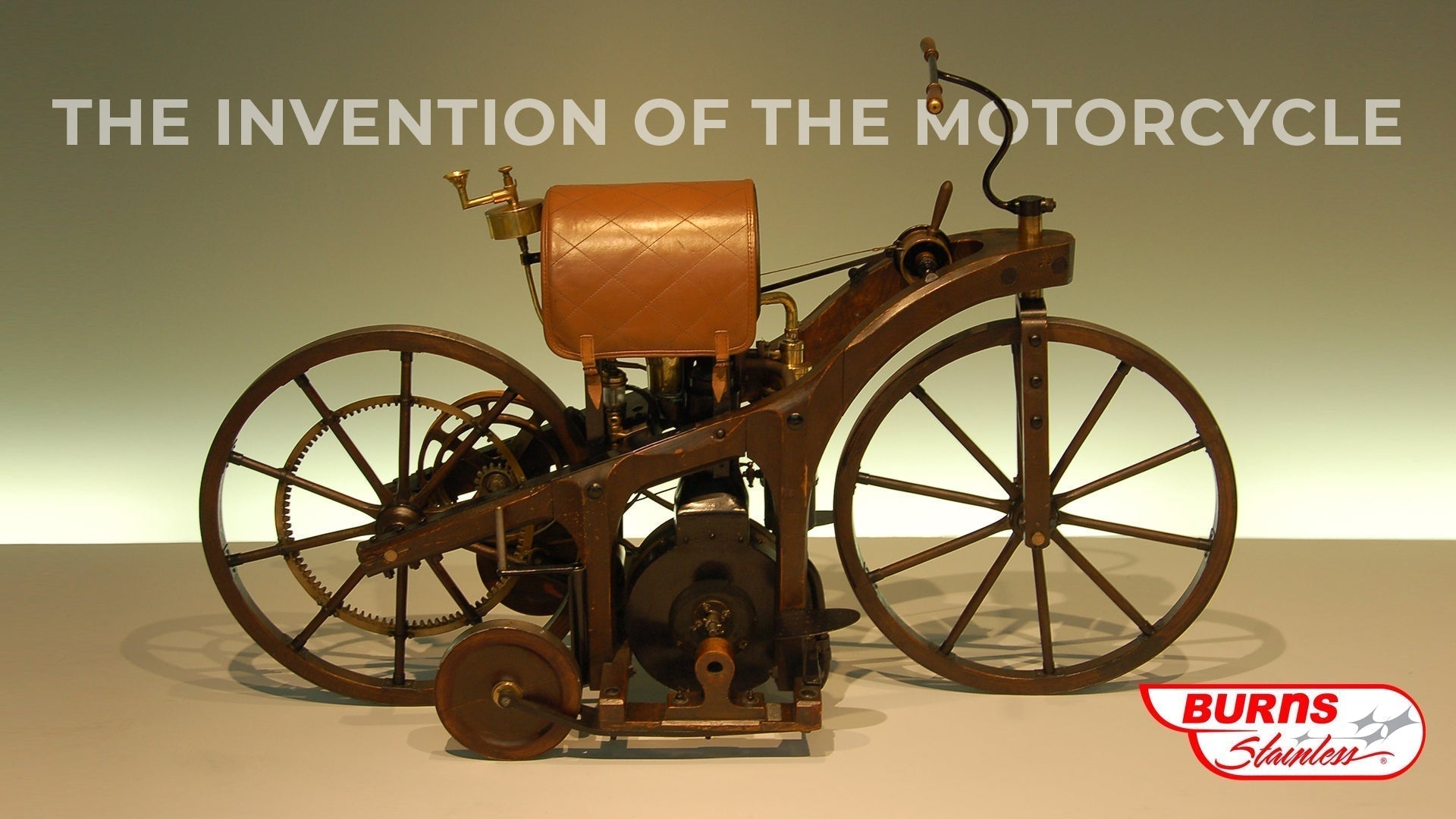
1885 — Gasoline Changes Everything
The real breakthrough came in 1885, when Gottlieb Daimler and Wilhelm Maybach introduced a gasoline-powered motorcycle prototype. Compared to steam, internal combustion engines were lighter, faster to start, and capable of sustained operation without carrying a boiler.
This wasn’t just an engine upgrade—it was a philosophical shift.
 Gasoline engines allowed builders to think in terms of power-to-weight ratio, RPM, and efficiency. The motorcycle began to move away from being a novelty and toward becoming a purpose-built machine.
 From this point forward, motorcycles were no longer experimental curiosities. They were mechanical systems to be refined.
1894 — The First Production Motorcycle
In 1894, the Hildebrand & Wolfmüller became the world’s first mass-produced motorcycle. This mattered not because it was perfect—it wasn’t—but because it formalized the idea that motorcycles were here to stay.
 For the first time, motorcycles were designed as products rather than prototypes. Reliability, repeatability, and usability entered the equation. The motorcycle shifted from experimental engineering to manufacturable machinery.
That transition remains relevant today. Performance only matters if it can be built correctly and consistently.
Harley-Davidson and the Move Toward Real-World Motorcycles
In the early 1900s, Harley-Davidson helped move motorcycles out of the experimental phase and into durable, real-world machines. Founded in 1903, Harley-Davidson prioritized mechanical simplicity, reliability, and usable torque over fragile peak output.
 Their early focus reflected the realities of American riding—long distances, inconsistent roads, and the need for engines that could pull hard without constant maintenance. Harley’s refinement of the V-twin engine reinforced this philosophy, and as displacement and performance increased, airflow management and exhaust design became increasingly important. These challenges pushed motorcycles toward system-level engineering rather than isolated component design.
Why Two Wheels Won
 So why did motorcycles survive while so many early automotive experiments faded?
Because two wheels offer something tricycles or cars never could:
- Lower weight
- Mechanical simplicity
- Direct rider feedback
- Exceptional power-to-weight potential
 Motorcycles reward efficient engineering. Every component matters. Excess weight is punished. Poor airflow is exposed immediately. There is no room to hide behind mass.
That’s why motorcycles have always attracted builders who understand physics, not gimmicks.
 The Overlooked Role of Exhaust Systems
Early motorcycles treated exhaust as an afterthought—a necessary outlet for noise and heat. But as engines evolved, that mindset became a limitation.
As RPM increased and power demands grew, exhaust systems became active performance components, influencing:
- Exhaust gas velocity
- Scavenging efficiency
- Throttle response
- Powerband shape
The motorcycle didn’t evolve because engines alone improved. It evolved because systems were engineered together.
From Early Racers to Modern Performance Builds
Racing accelerated everything. Competition forced improvements in weight reduction, heat management, and airflow optimization. The lessons learned on early tracks still apply today—whether building a vintage racer or a modern high-output V-twin.
Modern motorcycles operate at levels early builders couldn’t imagine, but the principles are unchanged:
- Control exhaust velocity
- Tune for usable power
- Design for real operating conditions
Horsepower claims change. Physics does not.
 Built on the Same Principles
From steam-powered experiments to today’s high-performance motorcycles, the core challenge has always been the same:
How do you move air, fuel, and exhaust as efficiently as possible in the smallest, lightest package?
That question shaped the first motorcycles—and it still defines performance engineering today.
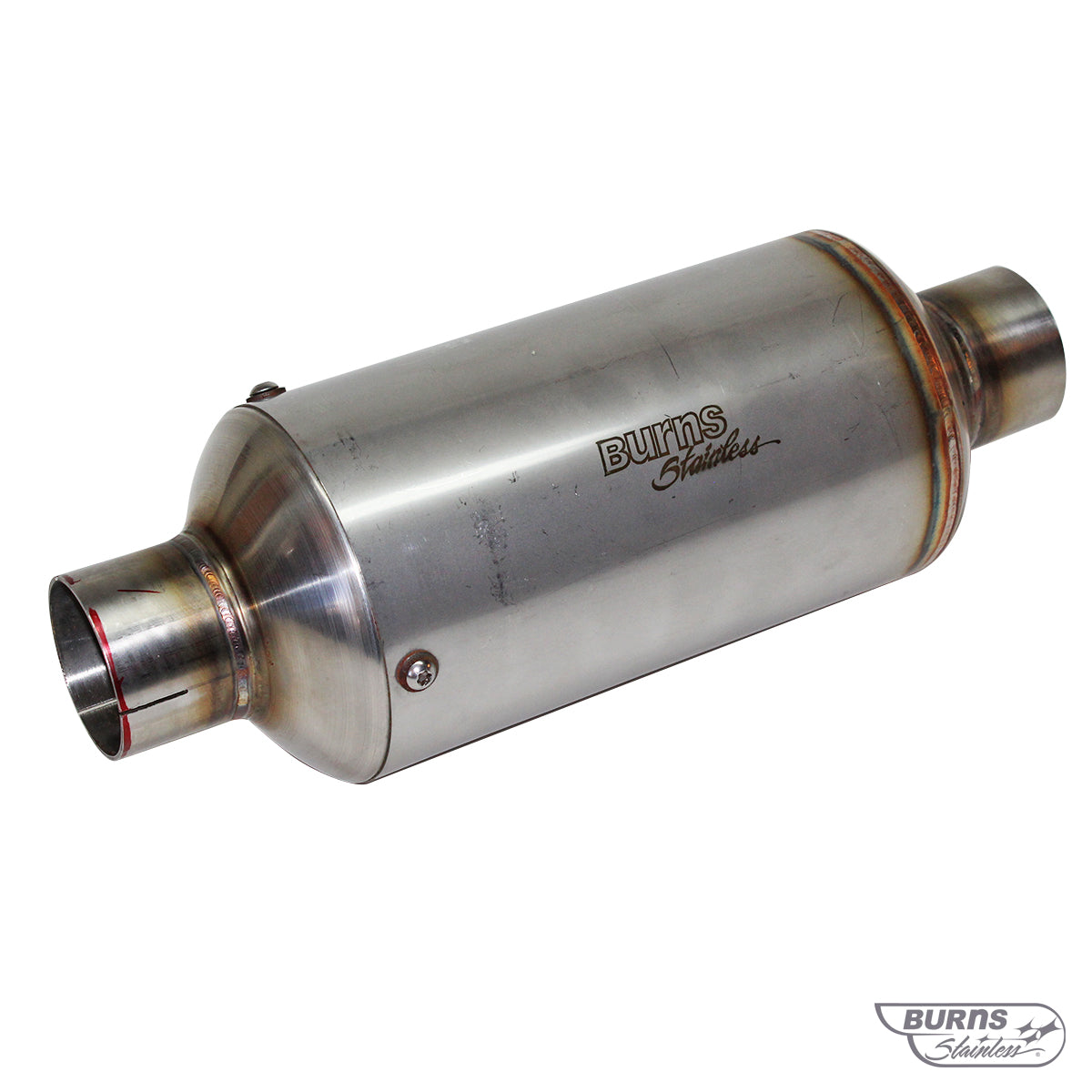
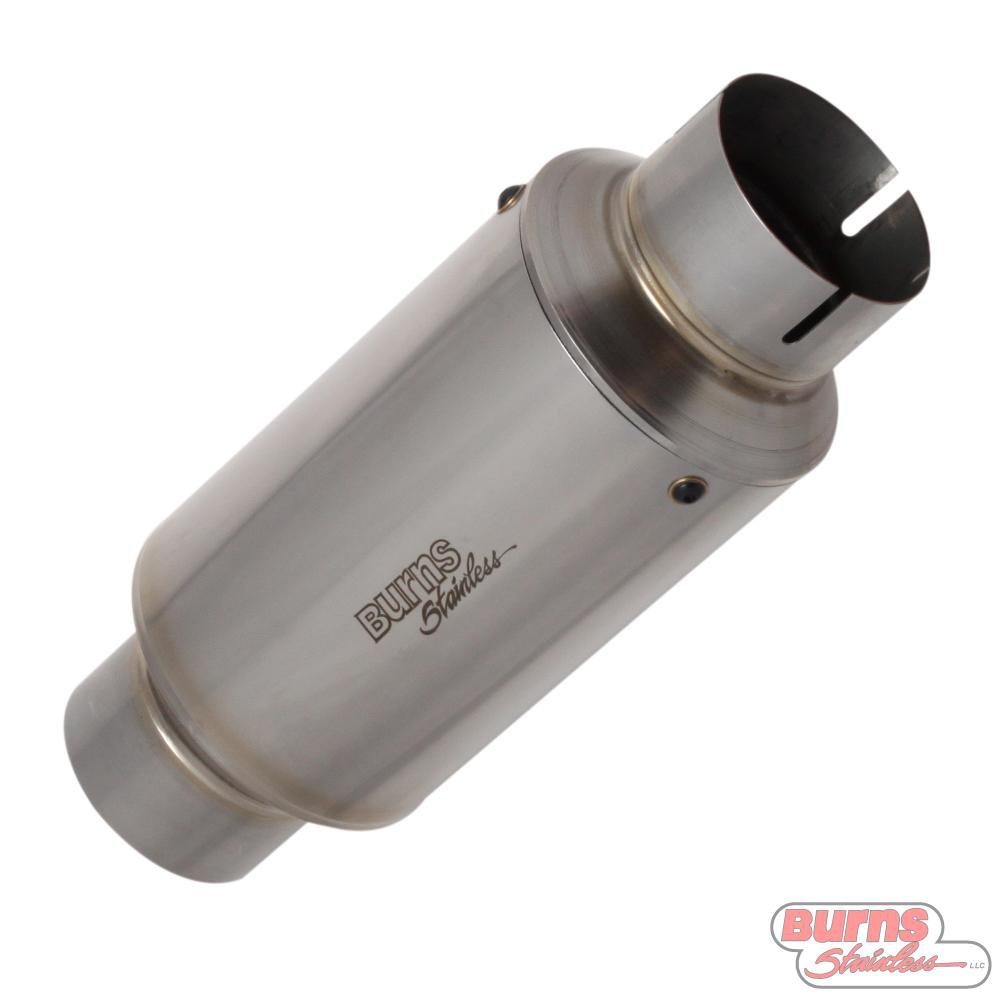
 At Burns Stainless, we design exhaust systems using the same principles that separate early experiments from true machines: tuned flow, controlled velocity, and purposeful design. Motorcycle history isn’t just about who came first.
It’s about someone who understands the machine.