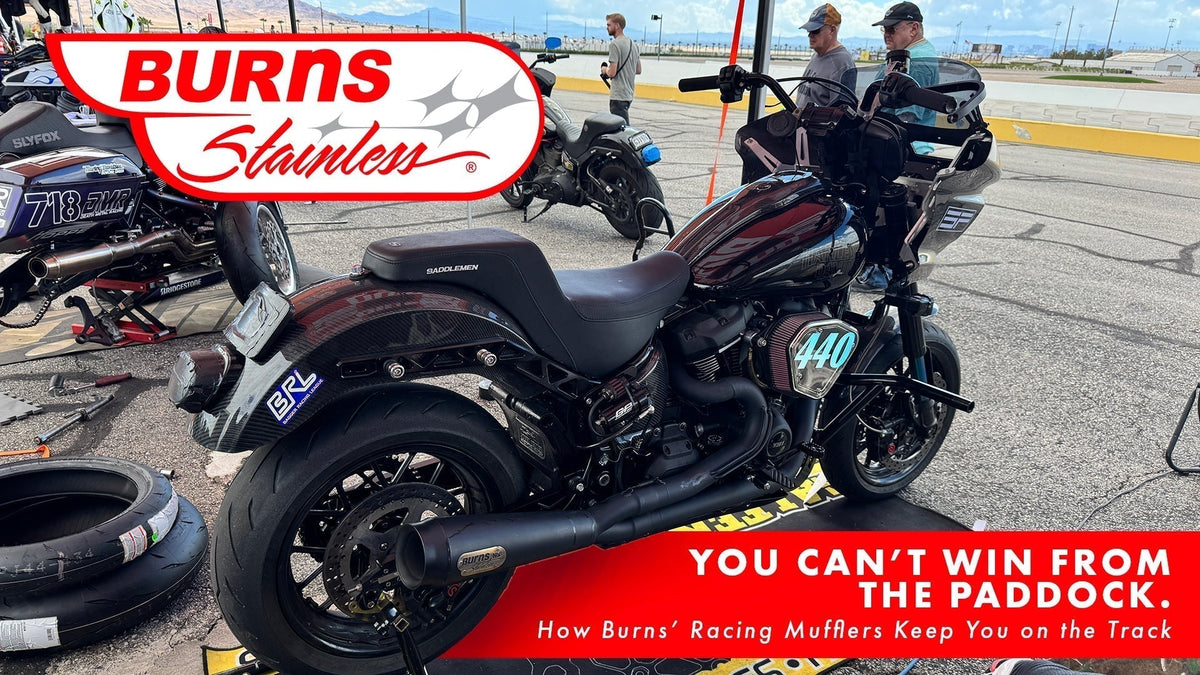
Horsepower does not matter much when the sound meter sends you back to the paddock, race mufflers keep you on the track. As more tracks operate under strict noise limits, sound control has become another part of race setup, right alongside horsepower, gearing, weight, suspension and tire pressure.
The challenge is simple: reduce sound enough to stay on track without restricting the engine more than necessary. That is where Burns Stainless Single-Stage and Two-Stage Race Mufflers come in.
Sound Control Is Part of Performance
A racing muffler has a different job than a typical street muffler. It needs to control sound while keeping weight and restriction to a minimum. Just as importantly, it needs to work with the complete exhaust system rather than simply quieting the outlet.
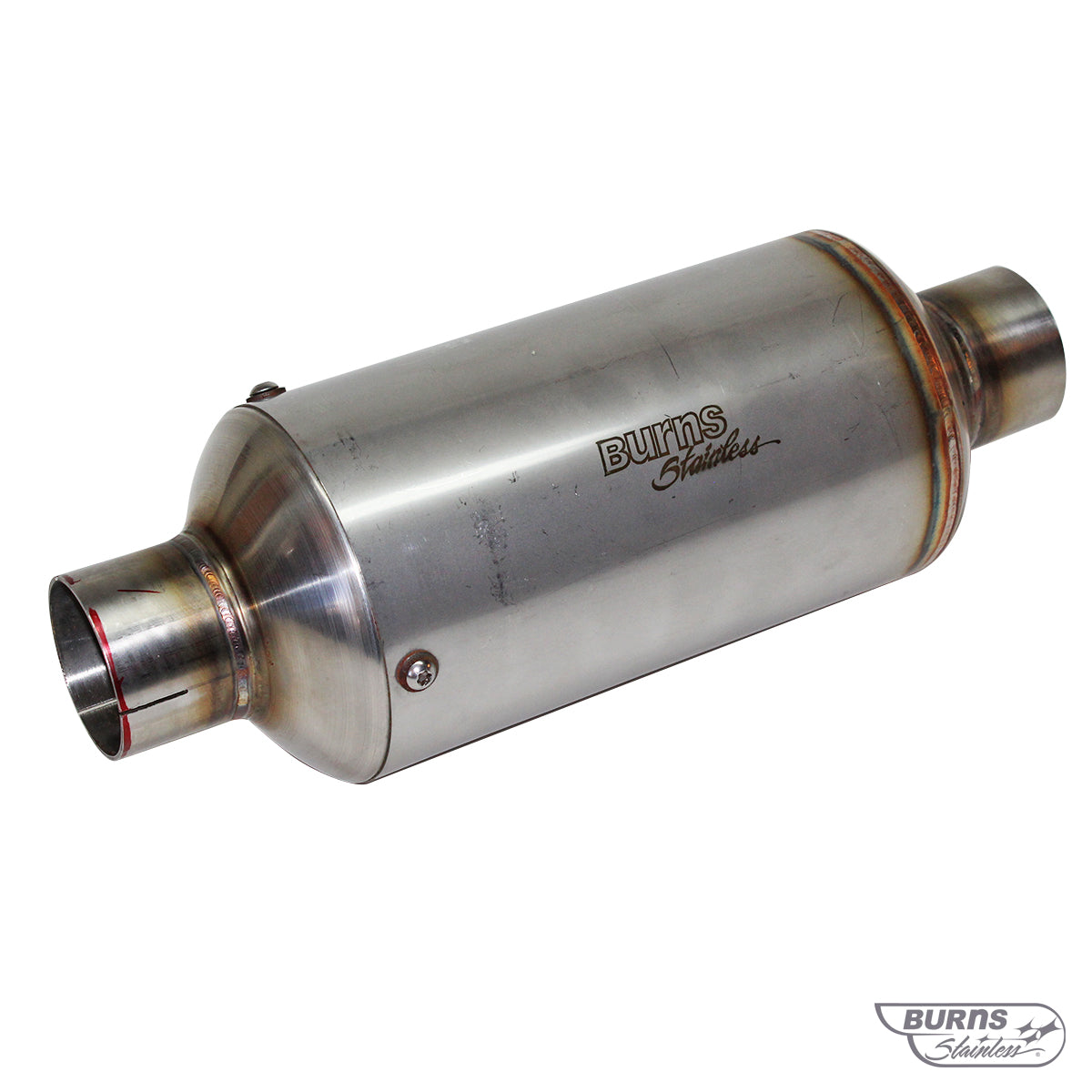
The Burns Stainless Single-Stage Race Muffler is the performance-first option. Exhaust flows through a straight perforated core surrounded by sound-absorbing material, helping reduce noise while maintaining strong exhaust flow. Its lightweight stainless-steel construction and repackable design make it well suited for demanding racing applications, including both automotive and motorcycle use.
For many race vehicles, the Single-Stage provides the right balance of sound reduction and low restriction.
When More Sound Control Is Needed
Some tracks require more.
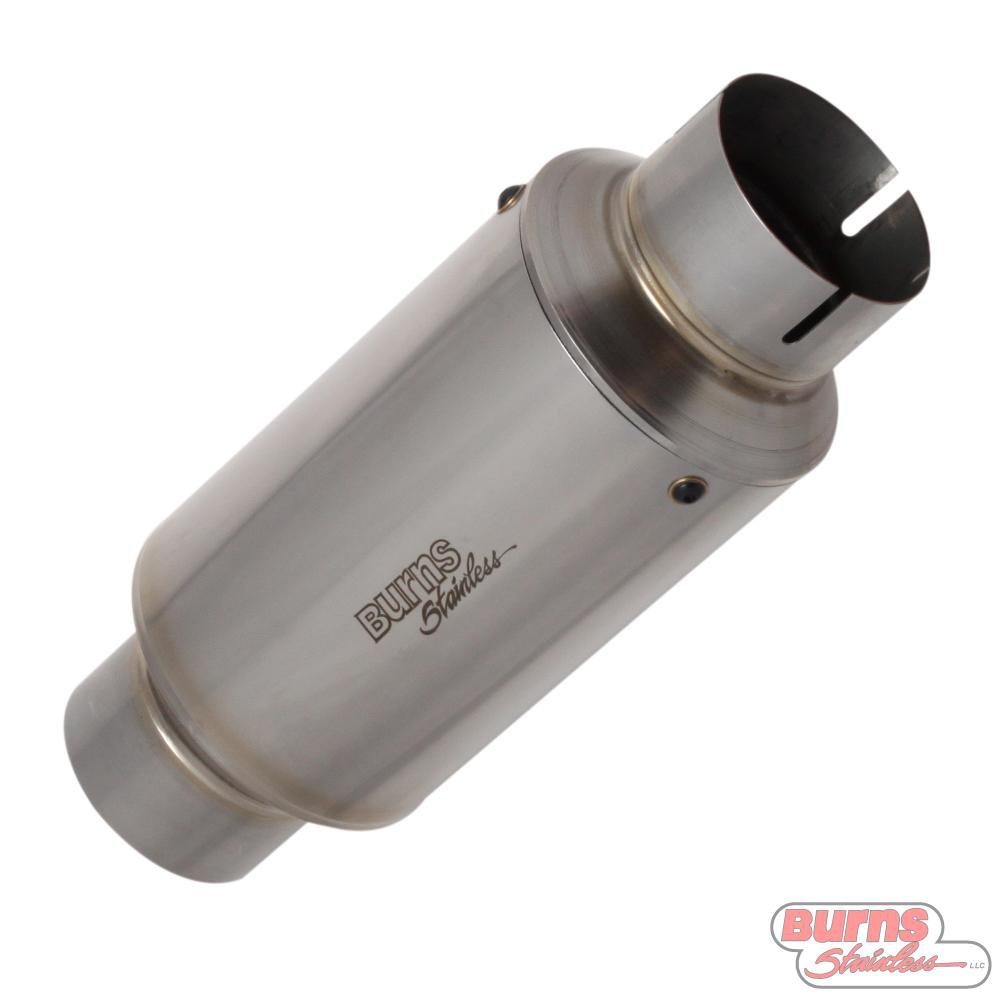
The Burns Stainless Two-Stage Muffler adds another level of sound control by combining the absorptive section with a baffled second stage. Depending on the application, this design can reduce sound by roughly another 2–4 dB compared with the Single-Stage configuration.
That may not sound like much, but at a noise-restricted facility, a few decibels can determine whether you make the next session or head back to the trailer.
The added sound control can also create more restriction. Burns testing has shown measurable horsepower differences when maximum sound reduction is used, which reinforces an important point: the goal is not to make the vehicle as quiet as possible. The goal is to use the least restrictive muffler that still meets the sound requirements of the track.
The Track Determines the Setup
Different tracks have different sound limits, so the ideal exhaust configuration can change from one event to another. A vehicle running at a less restrictive facility may benefit from maximum flow, while a noise-sensitive track may require additional attenuation.
That makes the muffler another tuning tool. The right setup gives the racer enough sound control to stay legal without giving away unnecessary performance.
Don't Forget the Packing
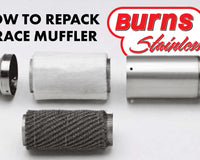
Muffler packing is also a maintenance item. Heat, vibration and pressure pulses eventually break down the sound-absorbing material inside the muffler. As the packing deteriorates, the vehicle can become louder and the internal acoustics of the exhaust can change.
Because Burns Stainless race mufflers are designed to be serviced and repacked, muffler inspection should become part of normal race preparation. It is better to find worn packing in the shop than when the track's sound meter is already pointed at your vehicle.
Single-Stage or Two-Stage?
The Single-Stage Race Muffler is the choice when lightweight construction, minimal restriction and maximum flow are the priorities and the track's sound requirement can be met with a straight-through design.
The Two-Stage Race Muffler is the better fit when additional sound reduction is required to meet stricter noise regulations.
Neither design is about making a race vehicle unnecessarily quiet. They are about controlling sound intelligently while preserving as much performance as possible.
Because You Can't Win From the Paddock
Modern performance exhaust design has to balance flow, velocity, pressure waves, heat, weight, packaging and horsepower. Today, sound belongs on that list too.
A properly selected race muffler helps the exhaust system continue doing its job while keeping the vehicle within the rules of the facility where it competes.
Because before horsepower can win a race, the vehicle has to be allowed onto the track.

Frequently Asked Questions About Race Mufflers
What is the difference between a Single-Stage and Two-Stage race muffler?
A Single-Stage race muffler uses a straight-through perforated core with sound-absorbing material to reduce noise while keeping restriction low. A Two-Stage muffler adds a baffle section for another level of sound control for tracks with stricter noise limits.
How much quieter is a Two-Stage race muffler?
Depending on the vehicle and exhaust system, a Two-Stage design can provide roughly 2–4 dB of additional sound reduction compared with a Single-Stage configuration.
Can a quieter race muffler reduce horsepower?
Yes. Additional sound reduction can increase exhaust restriction, which may affect horsepower. The goal is to use the least restrictive muffler that still meets the sound requirements of the track.
Do race mufflers need to be repacked?
Yes. Muffler packing can deteriorate over time from heat, vibration and exhaust pressure pulses. As the packing wears, the exhaust can become louder. Regular inspection and repacking can help maintain consistent sound control and performance.
Can Burns Stainless race mufflers be used on motorcycles and cars?
Yes. Burns Stainless race mufflers are used in a wide range of motorsports applications, including motorcycle and automotive racing. The correct muffler depends on the engine, exhaust system, available space and track sound requirements.