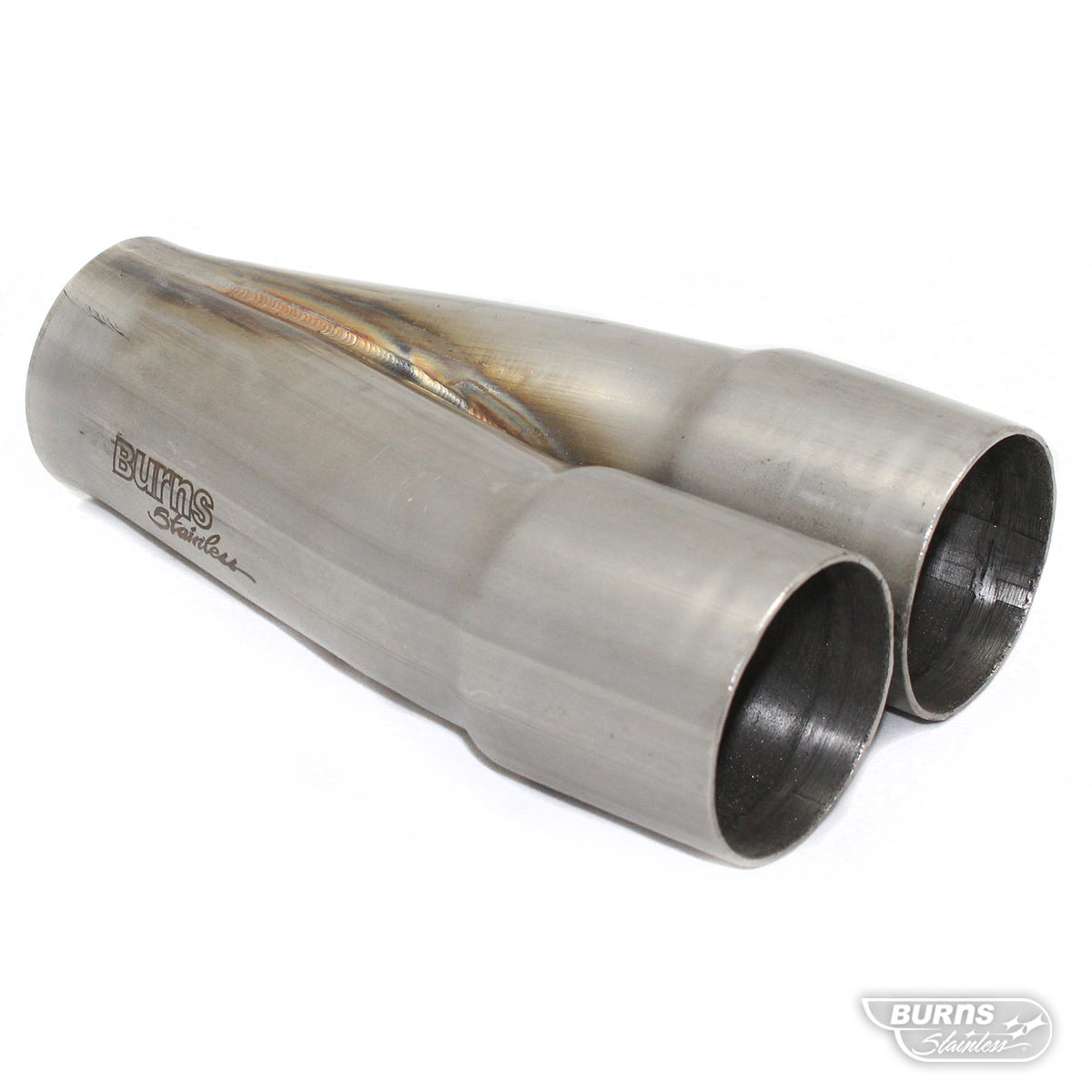
What makes one performance exhaust collector better than another? The biggest differences are precision, tube alignment, internal finish, weld quality and consistent sizing. A properly built merge collector helps maintain clean exhaust flow while making fabrication, installation and future replacement easier.
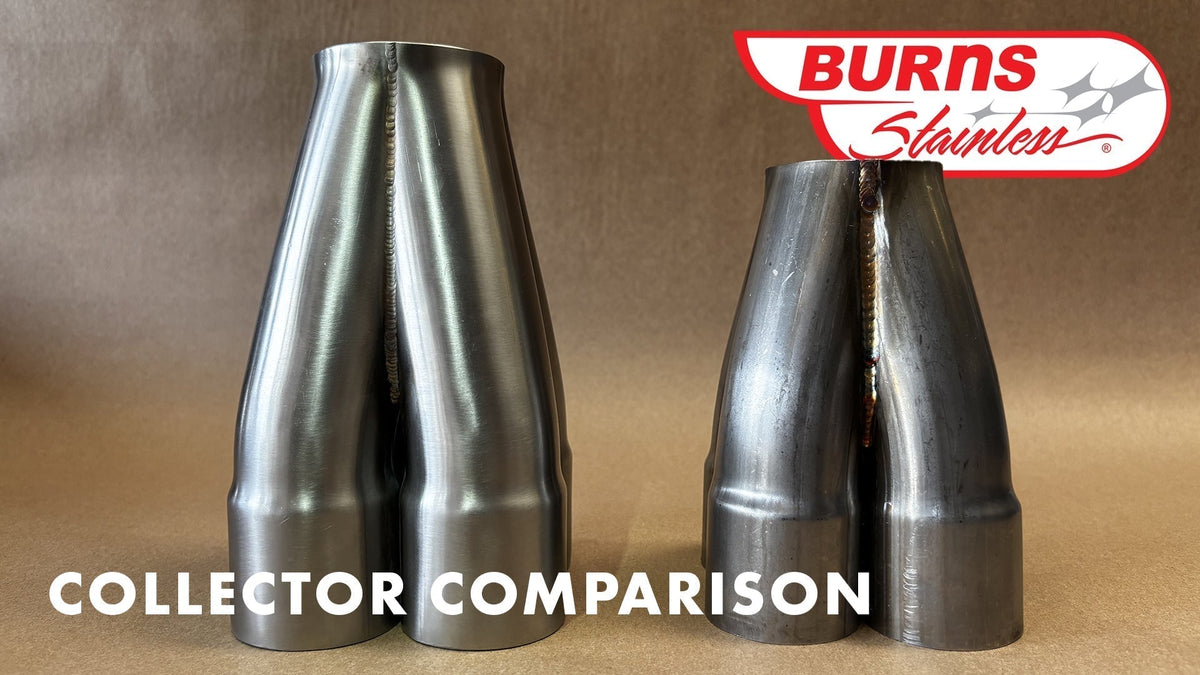
In this episode of Vince in Shorts, Vince Roman compares a Burns Stainless collector with a quality, American-made generic collector to show why precision matters—especially when you are fabricating a performance exhaust system.
It Starts With Fit and Finish
A Burns Stainless collector is finished inside and out, with clean TIG welds and carefully blended internal surfaces. The interior is polished to remove rough edges and weld fragments that could disrupt exhaust flow.
But appearance is only part of the process.
Every collector is checked with precision tube gauges to verify that the primary tubes fit properly and the outlet remains round. Those tolerances help create a tight seal while making life easier for the fabricator when fitting and welding the rest of the exhaust system.
The primary tubes are also kept parallel and consistently spaced. That becomes especially important when building a custom header—or replacing a collector later without having to rebuild everything around it.
Small Differences Create Big Headaches
The comparison collector looked respectable from the outside, but closer inspection revealed several differences. The primary tubes were not parallel, internal surfaces were left rougher, spacing varied and some tube openings would not accept the gauge completely.
Those inconsistencies may not make the collector unusable, but they can create unnecessary fabrication problems. A tube that will not slide fully into position, an outlet that is not properly formed or primaries sitting at different angles can turn a straightforward exhaust build into hours of fitting and adjustment.
When a race is only a few days away, those details become important very quickly.
Built for the Fabricator—and the Racetrack
Burns Stainless collectors are hand-built by experienced craftsmen, back-purge welded and inspected for consistency throughout the manufacturing process. It takes more time, but the goal is simple: build a collector that fits properly, looks right and provides a clean path for exhaust flow.
That is the difference between simply making a collector and building one with precision.
Because when it comes time to fabricate the rest of the exhaust system, the details inside the collector matter just as much as the ones you can see.

FAQ's
What is a performance exhaust collector?
A performance exhaust collector joins multiple primary exhaust tubes into a single outlet. Its shape, alignment, internal transitions and dimensions can influence exhaust flow and how easily the complete exhaust system can be fabricated.
Why does the inside of an exhaust collector matter?
Rough welds, sharp edges and inconsistent transitions can create disturbances in exhaust flow. Burns Stainless finishes and blends the internal surfaces of its collectors to create a cleaner path through the collector.
Why should collector tubes be parallel?
Parallel, consistently spaced primary tubes make it easier to fabricate a header accurately. They can also make replacement easier because the new collector is more likely to match the original header geometry.
Why does Burns Stainless gauge its collectors?
Burns Stainless uses tube gauges to verify that the primary openings accept the intended tubing and that the collector outlet remains properly formed. This helps provide consistent fitment and cleaner fabrication.
Are Burns Stainless collectors back-purge welded?
Yes. Burns Stainless states that its collectors are back-purge welded during fabrication to help maintain weld quality on the inside of the stainless steel assembly.
Does a more expensive exhaust collector automatically make more power?
Not necessarily. Collector performance depends on the complete exhaust design, including primary diameter, length, merge geometry, outlet size and the engine combination. Precision manufacturing helps ensure the collector performs as designed and fits consistently.