Why decades of racing experience, established engineering principles, and a willingness to challenge conventional thinking matter when designing a performance exhaust.
Great Exhaust Systems Begin With the Right Questions
When Burns Stainless set out to develop our NhB Performance Exhaust Systems for Harley-Davidson motorcycles, we weren't starting from scratch.
We brought decades of experience engineering exhaust components for high-performance engines, along with a history of working directly with Harley-Davidson racers dating back to 2001.
Over those years, we learned that the Harley-Davidson V-twin presents some unique engineering challenges. We also learned that certain exhaust design principles, even those proven in other forms of motorsports, don't always translate directly to these engines.
That knowledge became part of the foundation for our NhB exhaust systems.
Our objective wasn't simply to build another exhaust that looked good, sounded aggressive, and produced an impressive peak horsepower number. We wanted to apply what we'd learned about exhaust gas dynamics, pressure-wave behavior, and engine performance to develop a complete system with a clear engineering purpose.
Here are ten questions that helped shape our approach.
1. What Does a Harley-Davidson Engine Really Need From Its Exhaust System?
It sounds like an obvious question, but the answer isn't as simple as making the exhaust flow more freely.
An exhaust system influences how efficiently an engine evacuates spent combustion gases and how pressure waves interact with the engine's valve events.
Those interactions affect cylinder scavenging, volumetric efficiency, and ultimately the shape of the engine's torque and horsepower curves.
And not every Harley-Davidson engine has the same requirements.
A stock Milwaukee-Eight used primarily for touring has different performance objectives than a large-displacement engine with aggressive camshaft timing, modified cylinder heads, and a substantially higher operating RPM range.
Before deciding what an exhaust system should look like, we need to understand what the engine is being asked to do.
The best exhaust isn't necessarily the one that produces the highest peak horsepower. It's the one that delivers the right performance for the application.
2. Why Doesn't Bigger Exhaust Tubing Always Make More Power?
One of the most persistent misconceptions in exhaust performance is that bigger tubing automatically means better flow, and better flow automatically means more horsepower.
The reality is more complicated.
Exhaust tubing diameter influences gas velocity, pressure losses, and the behavior of pressure waves traveling through the system.
Increasing diameter can reduce flow restriction under certain conditions, but it also changes the acoustic characteristics of the exhaust system. Those changes can help or hurt cylinder scavenging depending on the engine and operating speed.
An exhaust that's too large for its intended application may sacrifice performance in portions of the RPM range where the motorcycle spends much of its time.
Conversely, an undersized system can become restrictive as engine output and exhaust mass flow increase.
The objective isn't to maximize tubing diameter.
It's to determine the appropriate dimensions for the engine and its intended operating range.
3. Can Stepped Headers Deliver a Better Balance of Performance?
A stepped header incorporates deliberate changes in tubing diameter along the exhaust path.
These transitions influence exhaust gas velocity, pressure-wave reflections, and the overall tuning characteristics of the system.
But simply adding steps doesn't guarantee an improvement.
The diameter of each section, the length of those sections, and the placement of each transition must be considered together.
A stepped-header design that performs well on one engine combination may not produce the same results on another.
At Burns Stainless, we approach stepped headers as an engineering tool rather than a styling feature.
The question isn't whether a header has steps.
It's whether those steps serve a specific performance objective.
4. Why Doesn't Conventional Merge Collector Sizing Theory Always Work on Harley-Davidson Engines?
This is where our experience with Harley-Davidson racing becomes particularly important.
Burns Stainless has worked with Harley-Davidson racers since 2001. Through that work, we encountered an important distinction between these engines and many of the other high-performance engines for which we'd developed exhaust components.
Our established merge collector sizing principles didn't translate directly to the Harley-Davidson V-twin.
Why?
One significant reason is the engine's distinctive firing sequence.
On a traditional Harley-Davidson 45-degree V-twin with a common crankpin, the firing intervals alternate between 315 and 405 degrees of crankshaft rotation.
 That uneven firing pattern changes the timing of exhaust pulses entering the collector and influences how pressure waves interact within the exhaust system.
Collector design is fundamentally about managing those interactions.
The geometry that works well with one firing pattern cannot automatically be assumed to be optimal for another.
Our experience showed us that Harley-Davidson collector sizing required a different approach from the methods we'd successfully used in other racing applications.
The specific design methodology we've developed remains proprietary, but the engineering lesson is worth sharing:
Proven engineering principles are invaluable, but they must be applied with an understanding of the engine's unique characteristics.
That knowledge, developed through years of working with Harley-Davidson racing applications, helped inform our approach to NhB exhaust development.
5. How Important Is Header Length to the Powerband?
Exhaust headers do more than transport gases away from the engine.
Every time an exhaust valve opens, a pressure disturbance travels through the exhaust system. As these waves encounter changes in geometry, portions of them reflect back toward the engine.
The timing of those returning waves relative to valve events can influence scavenging and cylinder filling.
Header length plays an important role in that timing.
A configuration optimized for high-RPM operation may not provide the same benefits in the lower and middle portions of the powerband.
And on a motorcycle, the engineering challenge goes beyond calculating a theoretically desirable length.
We also have to account for chassis geometry, rider clearance, ground clearance, component placement, and practical manufacturing considerations.
The objective is to develop header geometry that supports the desired engine performance while working within the physical realities of the motorcycle.
6. What Makes a Merge Collector More Than Just a Place Where Pipes Come Together?
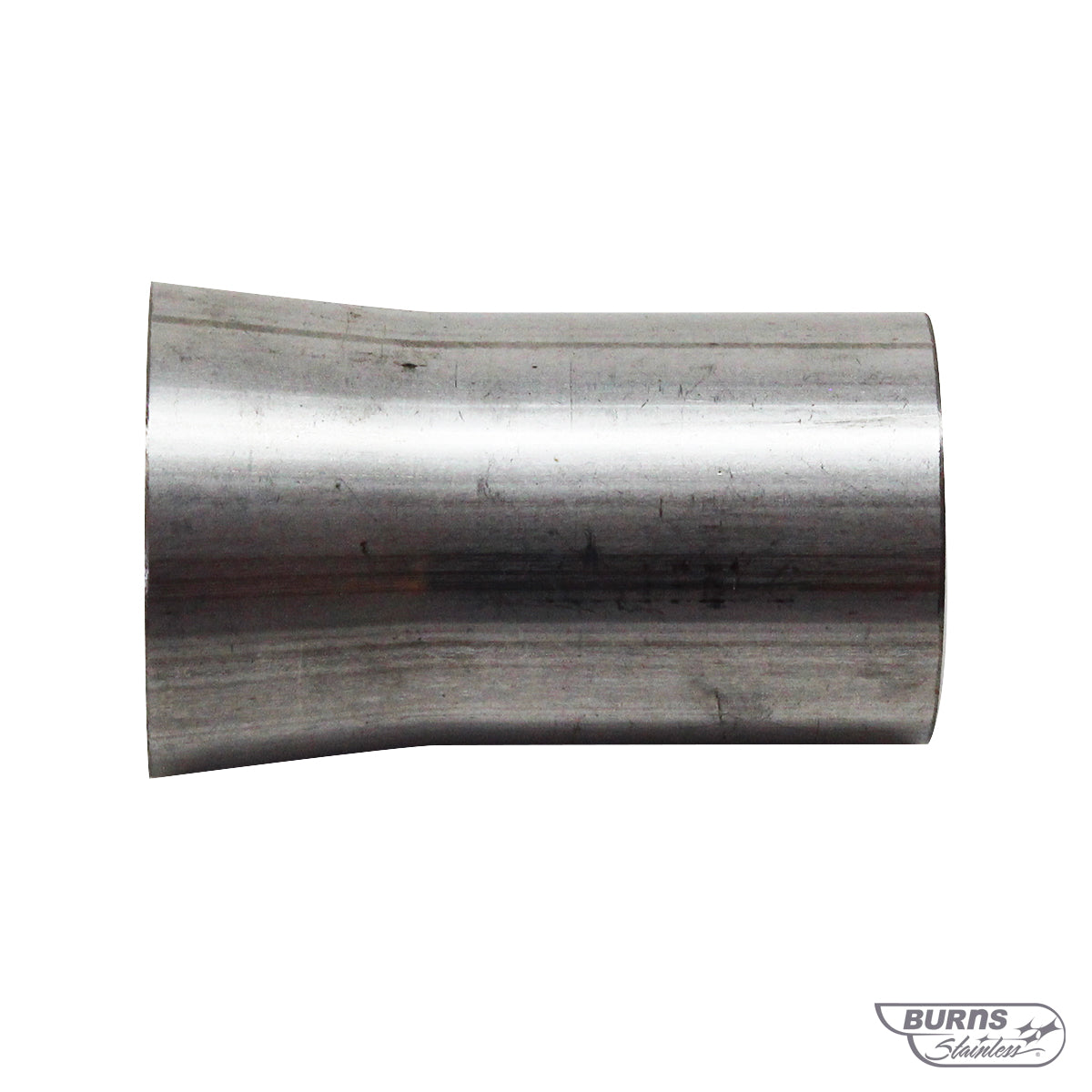
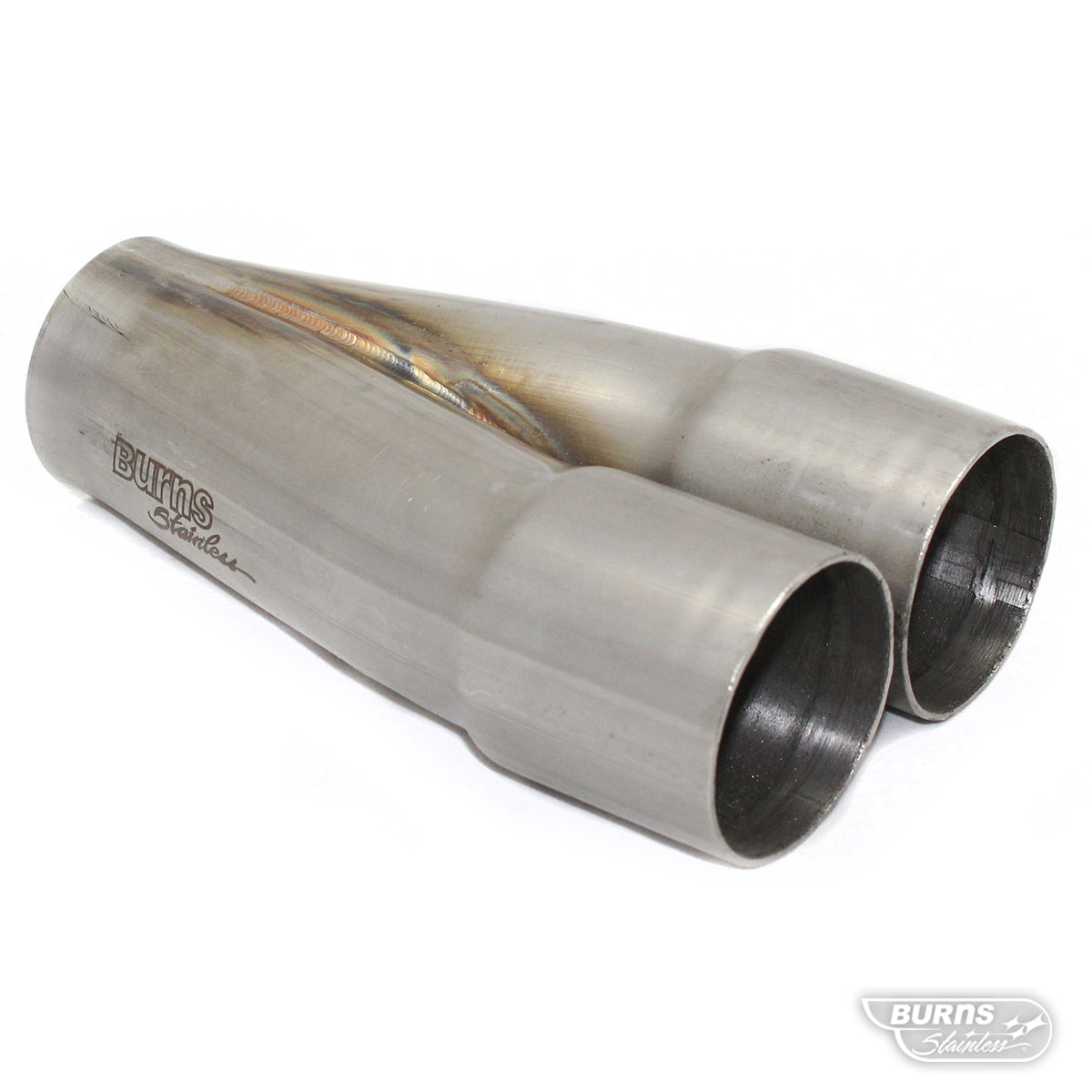
The merge collector is one of the most important components in a properly engineered 2-into-1 exhaust system.
Unfortunately, it's also one of the most misunderstood.
From the outside, two collectors may appear remarkably similar. Internally, however, their geometry can be very different.
Collector entry angles, internal transitions, merge geometry, outlet diameter, and downstream configuration all influence how exhaust gases and pressure waves behave.
A collector shouldn't be evaluated simply by how smoothly two pipes appear to join together.
Its purpose is to help manage the interaction between exhaust pulses while providing an appropriate transition into the downstream exhaust system.
This is an area where Burns Stainless has invested decades of engineering effort.
And it's one reason we don't treat the collector as an afterthought.
The collector isn't merely a connection between components. It's an active part of the exhaust system's tuning behavior.
7. Should We Optimize for Peak Horsepower or the Entire Powerband?
Peak horsepower makes for an easy comparison.
It's a single number. It's easy to advertise, easy to remember, and easy to argue about.
But it doesn't tell the whole story.
Two exhaust systems can produce similar peak horsepower figures while delivering noticeably different torque curves.
One may produce stronger acceleration through the middle of the RPM range. Another may favor performance near the engine's upper operating limit.
Neither characteristic can be judged properly without considering the intended application.
For a street-driven Harley-Davidson, broad, accessible torque can be especially valuable. For a purpose-built racing engine, the priorities may be different.
We believe exhaust performance should be evaluated in terms of the complete powerband, not just the highest number recorded during a dyno pull.
The important question is not simply how much power the engine makes.
It's where that power is produced and how effectively the rider can use it.
8. Can We Address Rider Heat Without Compromising Exhaust Engineering?
Performance isn't the only consideration when developing a motorcycle exhaust.
Packaging and rider comfort matter, too.
On Harley-Davidson touring motorcycles, rear-cylinder exhaust routing can place a significant source of heat close to the rider's leg.
It's a familiar concern, particularly in slow-moving traffic and warm weather.
But changing the routing of a header pipe isn't necessarily a simple solution.
Every routing change can affect tube length, bend geometry, packaging, and other characteristics that influence exhaust performance.
With our NhB Outlaw Series, we addressed this challenge by routing the rear-cylinder head pipe back and down, creating additional separation from the rider's leg.
The goal was to address a practical rider concern while respecting the engineering requirements of the exhaust system.
It's a reminder that a well-designed performance product must account for how it will actually be used.
9. How Do We Balance Sound, Flow, and Performance?
An exhaust system's sound is important to many Harley-Davidson riders.
But sound alone isn't evidence of performance.
A loud exhaust isn't necessarily an efficient exhaust, and a quieter system isn't automatically restrictive.
Sound characteristics are influenced by exhaust pulse timing, tubing geometry, muffler construction, internal volume, and outlet configuration.
The muffler also affects the acoustic behavior of the complete exhaust system, including pressure-wave reflections that can influence engine performance.
That means muffler design cannot be separated entirely from header and collector design.
We approach the exhaust as a complete system, with sound as one of several important design considerations.
The objective is to develop a distinctive exhaust character without allowing sound alone to dictate engineering decisions.
10. How Do We Turn Decades of Racing Experience Into a Complete Performance Exhaust System?
This may be the most important question of all.
Burns Stainless built its reputation by helping racers and engine builders solve exhaust performance problems.
That work requires understanding the engine, identifying the appropriate design parameters, and recognizing how individual components influence the complete system.
Over the years, we've developed extensive knowledge of header design, merge collector geometry, material selection, and exhaust system behavior.
Our work with Harley-Davidson racers, beginning in 2001, added application-specific experience that became especially valuable when developing our NhB systems.
But translating that knowledge into a complete motorcycle exhaust involves more than combining a set of individually well-designed parts.
The header, collector, downstream tubing, muffler, and physical routing must work together.
Each design decision influences others.
A change intended to improve one characteristic can affect another, sometimes in ways that aren't immediately obvious.
That's why exhaust engineering requires a systems-level approach.
The objective isn't to build the best individual header, collector, or muffler. It's to engineer the best complete exhaust system for the intended application.
Engineering Experience Makes the Difference
When we developed our NhB Performance Exhaust Systems, we weren't relying on guesswork or simply following the conventions of the motorcycle exhaust industry.
We were applying decades of exhaust engineering experience, including knowledge gained from working with Harley-Davidson racers since 2001.
That experience taught us that the unique characteristics of the Harley-Davidson V-twin deserve careful consideration.
It also reinforced an engineering principle we've valued throughout our history:
The engine determines what the exhaust needs to do. Our job is to understand those requirements and engineer a system that meets them.
From stepped headers and merge collectors to muffler design, material selection, and rider comfort, every element deserves attention.
Because a great performance exhaust isn't defined by how large its tubing is, how loud it sounds, or how impressive it looks.
It's defined by how well the complete system works.
And at Burns Stainless, that's where the engineering begins.